Why Golf Courses Overseed for Winter — and How It Affects Your Game
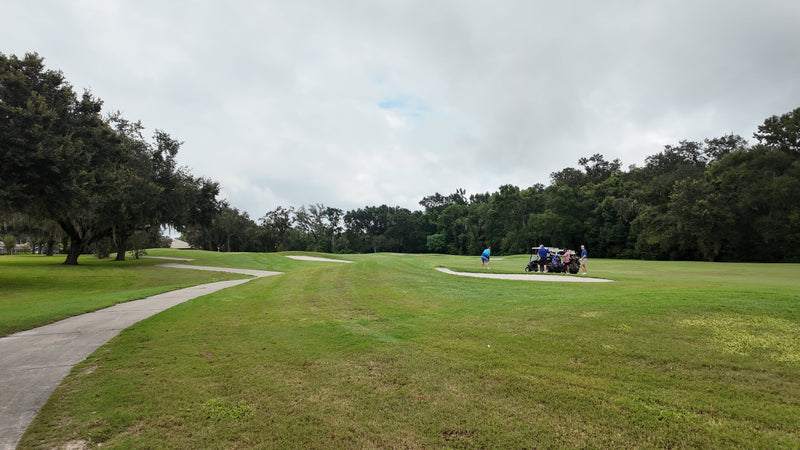
If you've played golf in Florida during the fall or winter, you've probably noticed that some courses have bright green fairways while others turn brown or tan. The difference often comes down to one important course-management decision: overseeding.
Overseeding is a common practice at golf courses throughout Florida and other warm-weather regions. It helps maintain green playing surfaces during the cooler months, when Bermuda grass—the turf used on many Florida courses—slows its growth and may become dormant.
But overseeding is about more than appearance. It affects course conditions, maintenance costs, playing strategy, and the overall golfing experience.
So why do some courses overseed while others don't? And what does it mean for your next round?
What Is Golf Course Overseeding?
Overseeding is the process of spreading seed over existing turf without completely removing the original grass.
In Florida, golf courses commonly overseed Bermuda grass with a cool-season grass called perennial ryegrass. Bermuda thrives in warm weather but slows down as temperatures drop. Ryegrass, meanwhile, can grow during cooler conditions and provide a green playing surface throughout the winter.
The goal is to maintain turf coverage and appearance while Bermuda grass rests.
Why Do Golf Courses Overseed?
Golf courses generally overseed for five main reasons:
1. Maintain green fairways throughout winter
Dormant Bermuda grass can turn brown or straw-colored. Ryegrass helps maintain a lush, green appearance during the cooler months.
2. Provide more uniform turf coverage
When properly established, ryegrass can create a more consistent playing surface across fairways, tees, and selected rough areas.
3. Meet golfer expectations
Winter is a busy season for Florida golf. Seasonal residents, visitors, and golf tourists often expect green fairways and attractive course conditions.
4. Improve course presentation
Green turf can enhance the visual appeal of a golf course, particularly at resorts, destination facilities, and private clubs.
5. Maintain winter playability
Bermuda grass grows more slowly in cooler weather. An established cover of ryegrass can help maintain more consistent turf coverage during this period.
However, overseeding isn't necessary for every course. Some facilities allow Bermuda grass to go dormant, prioritizing cost savings, firm playing surfaces, and a smoother transition back to active growth in spring.
What Happens to a Golf Course During Overseeding?
Overseeding can temporarily change how a golf course looks and plays. The effects depend on the course's maintenance practices, grass variety, weather, and stage of establishment.
Fairways May Become Greener and Softer
Once ryegrass establishes itself, fairways typically develop a greener appearance. Depending on grass density, mowing height, moisture, and soil conditions, the surface may also feel softer or more cushioned than dormant Bermuda.
That change can affect how the ball sits, rolls, and reacts after landing.
Courses May Experience Temporary Disruptions
Before overseeding, superintendents may mow existing turf closely and prepare the surface to improve seed-to-soil contact. After seeding, irrigation and careful monitoring help the grass establish.
During this period, golfers may encounter:
-
Temporary cart restrictions or designated cart routes.
-
Roped-off areas to protect newly seeded turf.
-
Temporary course closures or reduced access in some cases.
-
Fairways that look thin or uneven while the new grass develops.
Conditions vary by facility, so it's worth checking with the course before booking if you're planning a special golf outing.
What About the Putting Greens?
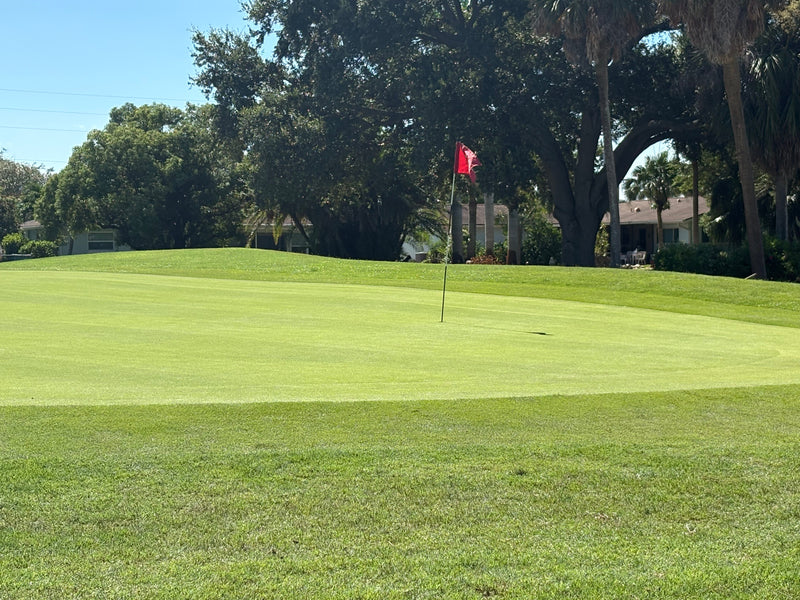
Overseeding the fairways doesn't necessarily mean the putting greens are overseeded.
Many Florida courses maintain their Bermuda putting greens through winter without introducing ryegrass. Green speed and smoothness depend on several factors, including mowing, moisture, rolling, aeration, and topdressing.
Some maintenance practices performed around the fall transition can temporarily affect putting conditions, but the approach varies from course to course.
More Water, Labor, and Maintenance
Establishing ryegrass requires seed, irrigation, fertilizer, mowing, and ongoing monitoring. Water needs can be particularly significant during germination and establishment, depending on weather, soil, irrigation practices, and the amount of turf being overseeded.
The work doesn't stop when winter ends, either. As temperatures rise, the ryegrass must decline enough for Bermuda grass to resume active growth.
If ryegrass persists too long, it can compete with Bermuda for sunlight, water, and nutrients. A poorly managed transition may leave thin or patchy areas.
How Does Overseeding Affect Your Golf Game?
For golfers, one of the biggest differences is how overseeded turf changes the ball's lie and the amount of rollout you get.
1. Your Ball May Sit Up Differently
Dense ryegrass can help the ball sit visibly above the ground, potentially making clean contact easier in some situations.
However, lush or wet grass can also interfere with club contact, making certain shots more challenging. The result depends on the lie, grass density, and moisture.
2. Your Drives May Roll Less
This is one of the most noticeable potential effects of overseeding.
Firm, dormant Bermuda fairways can allow the ball to release and roll after landing. Overseeded fairways may hold the ball more quickly, especially when the turf is lush or damp.
That can leave you with a longer approach shot than you might expect.
3. Rough Shots Can Become More Challenging
Thick ryegrass can grab the clubhead and make it harder to predict how the ball will come out of the rough. The amount of grass between the clubface and the ball can also affect spin and distance control.
As always, assess the lie before deciding whether to attack the pin or play a safer shot.
4. Putting Conditions May Be Different
Remember that overseeded fairways don't automatically mean overseeded greens.
If the putting surfaces remain Bermuda, their speed and consistency will depend largely on how the greens are maintained. If greens are overseeded or undergoing seasonal maintenance, the playing experience may differ.
The best approach is to judge each course on its actual conditions rather than assume every overseeded course will play the same way.
Does Overseeding Make a Golf Course Play Longer?
It can, but not always. The biggest factor is often how much the ball rolls after landing.
Consider this example:
-
A golfer carries a drive 240 yards.
-
On a firm Bermuda fairway, the ball rolls another 20 yards, for a total of 260 yards.
-
On a softer overseeded fairway, the same drive rolls only another 10 yards, for a total of 250 yards.
That's a difference of 10 yards, even though the golfer's carry distance hasn't changed.
Over an entire round, reduced rollout could mean facing longer approach shots and needing different club selections.
On the other hand, a ball sitting up in the grass may help some golfers make more consistent contact. Actual results depend on the course, weather, moisture, turf density, and individual playing conditions.
The takeaway: Don't automatically add or subtract a set number of yards when playing an overseeded course. Pay attention to how the ball is reacting that day.
What Does Overseeding Cost a Golf Course?
Overseeding is a significant operating decision. While it can improve winter presentation, it also adds expenses that course operators must weigh against potential benefits.
| Cost category | Potential impact |
|---|---|
| Seed | A major direct expense that varies with acreage and seeding rates |
| Labor and equipment | Surface preparation, seeding, mowing, and ongoing maintenance |
| Irrigation and water | Additional watering during establishment, depending on conditions |
| Fertilizer and materials | Inputs needed to establish and maintain healthy ryegrass |
| Lost or reduced revenue | Possible impacts from temporary closures or playing restrictions |
| Spring transition | Additional labor and management to restore active Bermuda growth |
There is also an opportunity cost. Money spent on overseeding cannot be spent on other improvements, such as drainage, bunker renovations, irrigation upgrades, or Bermuda turf recovery.
For a golf course operator, the question isn't simply how much overseeding costs per acre. It's whether the benefits—such as winter revenue, golfer satisfaction, and competitive positioning—justify the full expense and operational disruption.
Overseeding vs. Dormant Bermuda: What's the Difference?
Both approaches can produce excellent golf conditions. The differences are largely related to appearance, firmness, maintenance, and seasonal management.
Overseeded Golf Courses
-
Typically have greener fairways during winter.
-
May offer more uniform turf coverage.
-
Require additional seed, water, labor, and maintenance.
-
May have softer surfaces and less ball rollout.
-
Require careful spring transition management.
Non-Overseeded Golf Courses
-
Often have brown or tan fairways during Bermuda dormancy.
-
Avoid seasonal ryegrass establishment costs.
-
May provide firmer fairways and more ball rollout, depending on conditions.
-
Avoid competition from ryegrass during spring green-up.
-
May look less lush to golfers who prefer green winter fairways.
Neither approach automatically makes a course better or worse. A well-maintained dormant Bermuda course can offer excellent firmness, consistent turf, and enjoyable playing conditions. An overseeded course can also deliver outstanding golf when the grass is properly established and managed.
Green doesn't always mean better, and brown doesn't necessarily mean poor conditions.
Why Do Some Florida Golf Courses Overseed While Others Don't?
For golfers in the Tampa Bay region, the decision often comes down to a combination of practical and financial considerations.
Customer expectations: Resorts and clubs serving winter visitors may prioritize green fairways and a lush appearance.
Budget: Public and daily-fee courses must weigh the cost of overseeding against other operating priorities.
Weather: Temperatures, rainfall, and cold snaps influence Bermuda dormancy and ryegrass establishment.
Turf quality: The existing Bermuda variety, turf density, and fairway condition all play a role.
Golf calendar: Courses hosting major winter events may place a greater emphasis on appearance and consistent coverage.
Water and environmental considerations: Irrigation availability, local restrictions, and resource-management goals may influence the decision.
Overseeding generally takes place in the fall, but the timing varies by location, weather, and course-management strategy. Superintendents must balance establishing the new grass with minimizing disruption to golfers.
The Bottom Line: What Golfers Should Know About Overseeding
Overseeding is a trade-off between winter appearance and playing conditions on one side, and cost, maintenance demands, and spring recovery on the other.
For golfers, it can mean greener fairways and more uniform turf, but it may also bring reduced rollout, different ball lies, temporary restrictions, and changing conditions while the grass establishes.
For golf course operators, the decision comes down to whether improved winter presentation and golfer satisfaction justify the additional expense.
The next time you book a round in Florida during the winter, take a moment to notice the course conditions. Is the fairway firm or soft? Is the ball releasing after landing? How is it sitting in the grass?
Understanding overseeding can help you make smarter club selections, adjust your expectations, and appreciate the work that goes into maintaining a golf course throughout the year.
Because when it comes to golf, the color of the fairway is only part of the story.
11 GOLF GAME FORMATS TO TRY WITH YOUR GROUP
Looking to make your next round a little more interesting?
If you play golf with the same group regularly, it's easy to fall into the same routine. Everyone keeps score, plays their own ball and heads to the 19th hole afterward.
But there are dozens of ways to change things up.
Whether you're organizing a golf outing, member event, weekly game, couples' round or just a Sunday foursome, the right format can make the round more fun and competitive for everyone.
Here are 11 of the best golf game formats to try, ranging from casual and social games to highly competitive formats.
1. Scramble
Ideal group size: 4+
Best for: Outings, mixed abilities and social golf
The Scramble is one of the most popular formats for golf outings.
Everyone tees off, the group chooses the best shot, and everyone plays the next shot from that location. The process continues until the ball is holed.
Example: Four golfers hit their drives → the group chooses the best drive → all four players hit their second shot from that location → the group chooses the best second shot → and so on.
Why it's popular
A Scramble is fast, social and allows golfers of different abilities to contribute. It's especially popular for corporate outings, charity tournaments and large groups.
Fun variation
Require every player to contribute a minimum number of drives during the round, such as three or four.
2. Best Ball / Four-Ball
Ideal group size: 4+
Best for: Competitive team golf
In Best Ball, every golfer plays their own ball throughout the hole. At the end of the hole, the lowest score among the teammates becomes the team's score.
Example:
-
Golfer A: 5
-
Golfer B: 4
-
Golfer C: 6
-
Golfer D: 5
Team score: 4
Unlike a Scramble, everyone plays their own ball, so individual performance still matters.
Great for: Competitive groups and golfers who want their individual play to count.
3. Shamble
Ideal group size: 4+
Best for: Strategy + individual golf
The Shamble is a terrific hybrid between a Scramble and Best Ball.
Everyone hits a tee shot, and the team selects the best drive. From that location, each player plays their own ball until the hole is completed.
You can then count:
-
Best 1 score
-
Best 2 scores
-
Best 3 scores
Why it's great
You get the fun of a Scramble off the tee but still get to play your own golf for the rest of the hole.
Our recommendation: A 2-best-ball Shamble is one of the best formats for a regular group looking for a combination of teamwork and individual competition.
4. Skins & 2s
Ideal group size: 3–8
Best for: Side games and excitement
In a Skins game, every hole has a designated value. The golfer with the lowest score wins the skin. If there's a tie, the value typically carries over to the next hole.
For example:
-
Hole 1: $10 — tie
-
Hole 2: $20 — tie
-
Hole 3: $30 — one winner
The winner of Hole 3 collects the accumulated $30.
You can play Skins gross, net, individually or as a team.
A popular variation is adding a 2s game, where players earn a portion of the pot for making a two on a hole.
Why it's great
Every hole has value, even if you're having a bad overall round.
5. Wolf
Ideal group size: 4
Best for: Strategy, competition and wagering
Wolf is one of our favorite formats for a foursome.
Each golfer becomes the Wolf on a rotating basis. The Wolf watches the other players hit their tee shots and can choose one of them as a partner — or choose to play the hole alone.
That decision can dramatically change the value of the hole.
Example: You're the Wolf. Player 2 hits a great drive, Player 3 hits a poor drive and Player 4 hits a decent drive.
Do you immediately choose Player 2 as your partner, or take the risk and go it alone?
That's where the strategy comes in.
6. Nassau
Ideal group size: 2–8
Best for: Traditional golf betting
Nassau is one of the classic golf betting formats.
Instead of playing one competition over 18 holes, you actually have three separate competitions:
-
Front 9
-
Back 9
-
Overall 18
For example, a $10 Nassau would have:
-
$10 Front 9
-
$10 Back 9
-
$10 Overall
That means you could lose the front nine, win the back nine and still win the overall competition.
7. Chapman / Pinehurst
Ideal group size: 4
Best for: Two-person teams, couples and member-guest events
The Chapman format is a two-person team game.
Both players tee off. Then:
-
Player A plays Player B's drive.
-
Player B plays Player A's drive.
-
The team chooses the better ball.
-
Players alternate shots from there until the ball is holed.
Why it's fun
Both players get to hit a tee shot, and then each has to play from their partner's drive. It creates plenty of strategy and makes for a great two-person competition.
8. Bingo, Bango, Bongo
Ideal group size: 3–4
Best for: Casual and social golf
Bingo, Bango, Bongo is a fun points game where three points are available on every hole.
Typically:
-
Bingo: First player to get onto the green
-
Bango: Closest to the pin once everyone is on the green
-
Bongo: First player to hole out
The beauty of the game is that you don't necessarily have to make the lowest score to win points.
A high-handicap golfer can compete against a low-handicap golfer, making this a great choice for casual foursomes.
9. Quota Game
Ideal group size: 4+
Best for: Individual competition
In a Quota Game, each golfer receives a target number based on their handicap.
For example, a golfer with a 12 handicap might have a quota of 24 points.
Players then earn points based on their scores:
-
Bogey: 1 point
-
Par: 2 points
-
Birdie: 3 points
-
Eagle: 4 points
If you finish with 28 points against a quota of 24, you're +4.
The golfer who beats their quota by the most wins.
Why it's good
Instead of simply competing against the best golfer in the group, everyone is competing against their own expected performance.
That makes Quota particularly good for groups with a wide range of handicaps.
10. Sixes / 6-6-6
Ideal group size: 4
Best for: Changing partners and keeping things interesting
The 6-6-6 format divides the 18-hole round into three six-hole segments.
For example:
-
Holes 1–6: Two players are partners
-
Holes 7–12: Partners change
-
Holes 13–18: Partners change again
Each six-hole segment can use a different format, including:
-
Best Ball
-
Scramble
-
Alternate Shot
-
Match Play
Why it's great
Nobody gets stuck with the same partner for the entire round. It's also excellent for groups where everyone wants a chance to play with everyone else.
11. Dots / Garbage
Ideal group size: 2–8
Best for: Multiple mini-games and side competitions
Dots, sometimes called Garbage, isn't one specific format. Instead, it's essentially a collection of mini-games played throughout the round.
Players can earn "dots" for accomplishments such as:
-
Birdie
-
Eagle
-
Sand save
-
Green in regulation
-
Closest to the pin
-
Longest putt
-
Chip-in
-
One-putt
-
Up-and-down
-
Par on a par 3
You can also create negative dots for things such as:
-
Three-putt
-
Water ball
-
Lost ball
-
Double bogey
-
Missed short putt
At the end of the round, add everything up to determine the winner.
Why it's great
There are opportunities to win something throughout the entire round, even if you're not having your best day with the scorecard.
WHICH FORMAT SHOULD YOU TRY?
The best format depends on the group you're playing with.
Want something relaxed and social? Try a Scramble or Bingo, Bango, Bongo.
Want more strategy? Give Wolf or a Shamble a try.
Have a competitive group? Best Ball, Nassau or Skins can keep everyone engaged.
Playing with golfers of different abilities? Quota, Scramble or Bingo, Bango, Bongo can help level the playing field.
And if you play with the same group every week, don't be afraid to mix formats throughout the season. Changing the game can make a familiar course and familiar foursome feel completely different.
The next time you tee it up, skip the usual game and try something new.
The 10 Things Golfers Do That Cost Them Strokes
Golfers often assume that the key to lower scores is hitting the ball better.
And while improving your swing certainly helps, many lost strokes have nothing to do with mechanics.
They come from decisions.
A golfer can hit a perfectly good shot and still make a poor decision about where to aim, which club to use or how aggressive to be. Over the course of 18 holes, those decisions can add up quickly.
Here are 10 common mistakes that can cost golfers strokes—and what to think about instead.
1. Trying to Hit the Hero Shot
You've hit your tee shot into the trees. There's a tiny opening toward the green.
You could punch out safely, or you could attempt the 1-in-20 shot that somehow gets you onto the putting surface.
Many golfers choose the second option.
The problem is that one bad shot can quickly turn into two or three.
Good course management isn't about playing scared. It's about choosing the shot that gives you the highest probability of getting back into position.
Ask yourself: What shot gives me the best chance of making my next shot easier?
Sometimes the smartest shot is simply getting the ball back into play.
2. Automatically Hitting Driver
Driver is the longest club in the bag, but that doesn't mean it's always the best club to hit.
If driver brings water, OB, trees or a difficult approach into play, hitting a shorter club may actually give you a better opportunity to score.
Consider two scenarios:
You're 20 yards closer to the green but hitting your next shot from the rough.
Or you're 20 yards farther away but sitting in the middle of the fairway.
Which one gives you the better chance of making par?
The answer may not always be the same.
The goal isn't to hit the shortest possible approach. It's to put yourself in the best position for the next shot.
3. Ignoring Where the Trouble Is
A lot of golfers look at the pin and immediately aim at it.
But the pin isn't always the best target.
If the flag is tucked five yards from a bunker, water hazard or short-sided slope, hitting directly at it can turn a reasonable approach into a big number.
Instead of asking only:
“Where is the pin?”
Ask:
“Where can I miss?”
Knowing where you don't want the ball to finish can be just as important as knowing where you want it to go.
4. Trying to Make Up for a Bad Hole
You make a double bogey.
The next tee comes around, and suddenly you're determined to get those strokes back.
So you swing harder. You take on a tighter line. You attack a pin you normally wouldn't.
And now you're making the same mistake again.
A bad hole doesn't need to turn into a bad stretch of holes.
Once the score is on the card, it's over. The next hole is a new opportunity.
The goal isn't to immediately “win back” the two strokes you lost.
The goal is to play the next shot well.
5. Leaving Putts Short
Nobody likes a three-putt.
As a result, some golfers become so focused on not hitting the ball too far past the hole that they leave their first putt several feet short.
The problem is simple: a putt that never reaches the hole has virtually no chance of going in.
Distance control should give the ball enough speed to reach the hole while keeping the potential comeback putt manageable.
Instead of thinking only about avoiding the three-putt, think about giving your first putt a legitimate chance to go in.
6. Firing at Every Pin
There's nothing wrong with being aggressive.
But aggressive doesn't always mean aiming directly at the flag.
Tour professionals consider the location of the pin, the shape and slope of the green, surrounding hazards, their lie and the consequences of a miss.
Sometimes the middle of the green is the aggressive play.
If a pin is tucked behind a bunker, for example, the smart target may be the larger section of green away from the trouble.
A birdie putt from 25 feet can be a much better result than a difficult recovery shot from a bunker.
7. Not Knowing Their Actual Distances
“How far do you hit your 7-iron?”
It's a simple question, but many golfers answer with a number based on their best shot rather than their reliable distance.
There's also an important difference between carry distance and total distance.
If you know that your reliable 7-iron carry is 145 yards, that's much more useful than knowing you once hit one 160.
Reliable numbers lead to better club selection.
The goal isn't to know how far you can hit a club when everything goes perfectly.
It's to know how far you can reasonably expect the ball to travel when you're standing over an important shot.
8. Practicing the Wrong Things
Most golfers love hitting full shots on the range.
There's nothing wrong with that. But think about where your strokes actually occur during a round.
How many shots do you hit from inside 100 yards?
How many come from around the green?
How many putts do you hit?
If a significant portion of your score comes from those areas, they deserve a significant portion of your practice time.
Practice should reflect the shots you actually need to hit—not just the shots that are the most fun to practice.
9. Changing the Swing After One Bad Shot
One bad shot happens.
Then comes the swing thought.
“Maybe my grip was wrong.”
“Maybe I didn't rotate enough.”
“Maybe I lifted my head.”
“Maybe my takeaway was too quick.”
Before long, you're standing over the ball thinking about five different mechanical adjustments.
Golf gets complicated quickly when every bad shot becomes a reason to rebuild your swing.
Sometimes the best adjustment is much simpler:
Pick the target. Commit. Hit the shot.
Not every poor shot needs an explanation.
10. Playing Against the Other Golfer
This may be one of the easiest traps to fall into.
Your playing partner hits driver 40 yards past you.
You decide to swing harder.
They hit a green from 210 yards.
You decide you should be able to do the same.
They make birdie.
Now you feel like you have to make birdie, too.
Suddenly, you're no longer playing your own game.
Every golfer has different strengths, weaknesses, distances and comfort levels. The shot that makes sense for one player may be a terrible choice for another.
Your goal isn't to hit the same shots as the person standing next to you.
It's to make the decision that gives you the best chance to score.
Better Decisions, Better Scores
Lower scores don't always require a completely different golf swing.
Sometimes they require a different approach to the game.
Know your distances. Pay attention to trouble. Choose realistic targets. Practice the shots you actually need. And when something goes wrong, resist the urge to immediately make things worse.
The next time you play, try paying attention to your decisions as much as your shots.
You may discover that there are a few strokes waiting to be saved without changing your swing at all.
4 Rules of Golf I’d Change
If you could change the Rules of Golf, what would you change?
For me, the goal would be simple: eliminate absurd penalties, make the game more common-sense, and help speed up play.
Golf has thousands of rules, exceptions, definitions, and procedures. Most exist for good reason, but there are still situations where the rules can feel overly technical or where a golfer is penalized for something that had little to do with their actual skill or strategy.
Here are four rules I would put at the top of the list.
1. Make Out of Bounds More Like a Lateral Penalty Area
The Current Rule
When a ball goes out of bounds — or is lost outside a penalty area — the standard penalty is stroke and distance. The player must add one penalty stroke and play again from the spot of the previous stroke.
In many cases, that means walking or driving all the way back to where the previous shot was played.
The Fix
Treat out of bounds more like a red penalty area.
Allow a player to take a lateral-style drop near where the ball crossed the boundary, with an appropriate penalty. Another option would be to make the existing Model Local Rule E-5, which provides an alternative to stroke and distance for certain lost balls and out-of-bounds situations, the standard approach more broadly.
Why Change It?
This is one of the biggest contributors to slow play.
Imagine hitting your tee shot 250 yards down the fairway, walking up to discover that the ball is just a few inches beyond the white stakes, and then having to walk all the way back to the tee.
The player hasn't gained an advantage. In fact, they're already taking a penalty.
Allowing a lateral-style option would keep the golfer moving forward instead of forcing them to retrace their steps.
The goal wouldn't be to eliminate the penalty. It would be to eliminate the unnecessary walking and waiting that comes with it.
2. Give Relief From Divot Holes in the Fairway
The Current Rule
If your ball comes to rest in an unrepaired divot in the fairway, you generally have to play it as it lies.
There is no automatic free relief simply because the ball is sitting in a divot.
The Fix
Allow free relief when a ball comes to rest in a man-made turf damage mark, such as an unrepaired divot, in the fairway.
A simple solution would be one club-length of relief, no closer to the hole.
Why Change It?
The fairway is supposed to be the reward for hitting a good shot.
You hit the ball straight, find the fairway, and then discover that your ball is sitting in a deep, sandy divot left behind by another golfer.
That's not really a test of your ability to hit the shot. It's simply bad luck.
Golf already recognizes that certain abnormal course conditions can justify relief. Extending that concept to significant divot damage in the fairway would make sense.
And it wouldn't make the game dramatically easier. You'd still have to hit the next shot. You'd simply avoid being punished for someone else's previous shot.
3. Simplify the Rules for Accidental Ball Movement
The Current Rule
The Rules of Golf have already become more forgiving in certain situations involving accidental ball movement.
For example, an accidental double hit during a stroke no longer carries an additional penalty under the modern rules.
But golfers can still find themselves dealing with highly technical situations involving accidental ball movement, searching for a ball, addressing the ball, or making a backswing.
The Fix
Adopt a much simpler standard:
If a player accidentally moves their ball without intending to improve their position or gain an advantage, replace the ball without penalty.
The important distinction would be intent.
If a player deliberately moves their ball, the rules would still apply. But if the ball is accidentally moved during a search or an otherwise normal part of playing the game, there shouldn't automatically be a penalty.
Why Change It?
Golf is supposed to test skill, strategy, decision-making, and mental toughness.
It shouldn't become a contest of who can avoid the most obscure technical infraction.
With today's ability to review video from multiple angles, even tiny movements can sometimes become the focus of an entire discussion.
The rules should encourage golfers to be honest and play by the spirit of the game — not make players afraid that an accidental movement could turn into a penalty after the fact.
4. Give Relief From Unraked or Poorly Raked Bunker Areas
The Current Rule
If your ball comes to rest in a bunker footprint, deep rake mark, or another area of poorly maintained sand, you generally have to play the ball as it lies.
That means a golfer can hit a perfectly good shot into a bunker and then be faced with an extremely difficult lie because another golfer failed to properly rake the bunker.
The Fix
Allow a player to repair the damaged area and then place the ball back in the bunker.
For example, the golfer could:
- Mark the position of the ball.
- Rake and repair the footprint or damaged area.
- Place the ball back in the repaired area.
- Play the shot without penalty.
Another option would be allowing the golfer to move the ball to the nearest comparable raked area within the bunker.
The important part is that the ball stays in the bunker.
Why Change It?
Bunker shots are already among the most difficult shots for many recreational golfers.
A properly maintained bunker provides a challenging but reasonable test. A deep footprint or poorly maintained area can turn that challenge into something completely different.
And unlike a difficult natural lie, a footprint isn't something the golfer created.
Why should one golfer be penalized because the golfer before them didn't rake?
The average recreational golf course also doesn't have the same level of bunker maintenance found on the PGA or LPGA Tour. On many courses, footprints and uneven sand are simply part of the everyday playing conditions.
Giving golfers a limited repair-and-place option would recognize that reality without removing the challenge of bunker play.
The Goal: Make Golf More Common-Sense
None of these changes are about making golf easier.
They're about making the game fairer and faster.
A golfer should still be penalized for hitting a bad shot, making a poor decision, or breaking a rule intentionally. But there is a difference between being penalized for your own mistake and being penalized because your ball landed in someone else's divot, someone didn't rake a bunker, or you accidentally moved your ball while searching for it.
The Rules of Golf should continue to protect the integrity of the game — but they can also recognize the realities of recreational golf.
What rule would you change?
That's the great thing about golf: everyone seems to have a rule they think needs fixing.
THE DIFFERENCE BETWEEN RED AND YELLOW STAKED HAZARDS ON A GOLF COURSE
If you've ever hit a golf ball into a marked hazard and wondered whether you should look for a red stake or a yellow stake, you're not alone. The color of the stakes can make a significant difference in the relief options available to you.
Under the USGA Rules of Golf, Rule 17, what golfers traditionally call "hazards" are officially known as penalty areas. These areas are identified by red or yellow stakes or lines, and the color determines which relief options are available when you choose to take a one-stroke penalty.
🟡 YELLOW PENALTY AREAS
Yellow penalty areas are commonly positioned across the line of play — for example, a lake or other hazard directly in front of a green or one that crosses a fairway.
If your ball enters a yellow penalty area and you decide not to play it as it lies, you have two relief options, both with a one-stroke penalty.
1. Stroke-and-Distance
Play a ball from the spot where you made your previous stroke.
2. Back-on-the-Line Relief
Determine the point where your ball last crossed the margin of the penalty area. Keep that point directly between you and the hole, and drop a ball anywhere on that line as far back as you like.
What You DON'T Have With Yellow Stakes
Yellow penalty areas do not offer lateral relief. That's the key difference between yellow and red penalty areas.
🔴 RED PENALTY AREAS
Red penalty areas are commonly found along the side or flank of a hole. Think of a lake running down the right side of a fairway, a wooded area along the left side, or another marked area bordering the hole.
With a red penalty area, you have the same two relief options available for yellow penalty areas, plus one additional option.
1. Stroke-and-Distance
Play a ball from where your previous stroke was made.
2. Back-on-the-Line Relief
Keep the point where your ball last crossed the margin of the penalty area directly between you and the hole, then drop as far back on that line as you like.
3. Lateral Relief
This is the option that makes red penalty areas different.
Find the point where your ball last crossed the edge of the red penalty area. You may take relief within two club-lengths of that point, using your longest club other than your putter to measure the relief area.
The ball must not be nearer the hole than the point where it last crossed the penalty-area margin.
YOU CAN ALSO PLAY THE BALL AS IT LIES
Here's an important point that is sometimes overlooked:
You don't automatically have to take a penalty when your ball enters a penalty area.
If you can and want to play the ball from inside the penalty area, you may play it as it lies without taking a penalty stroke.
Under the rules, you are also permitted to ground your club and take practice swings that touch the ground or water inside a penalty area.
So, if your ball is sitting in a playable spot, you can choose to play it without taking a stroke.
RED vs. YELLOW: THE QUICK REFERENCE
| 🟡 Yellow Penalty Area | 🔴 Red Penalty Area | |
|---|---|---|
| Common location | Across the line of play | Along the side of a hole |
| Stroke-and-Distance | ✅ Yes | ✅ Yes |
| Back-on-the-Line | ✅ Yes | ✅ Yes |
| Lateral Relief | ❌ No | ✅ Yes |
| Number of penalty-relief options | 2 | 3 |
| Can you play it as it lies? | ✅ Yes | ✅ Yes |
THE BOTTOM LINE
The easiest way to remember the difference is:
Yellow = two relief options.
Red = three relief options, including lateral relief.
And remember, the relief options above involve a one-stroke penalty. If your ball is playable and you choose to play it from inside the penalty area, you can do so without taking a penalty stroke.
Understanding the difference between red and yellow stakes can help you make a quicker, more informed decision the next time your ball finds a penalty area.
WHAT IS THE AVERAGE GOLF COURSE MAINTENANCE BUDGET FOR 2026?
Have you ever wondered what it actually costs to maintain a golf course?
Golf courses may look simple from the outside—fairways, greens, bunkers, trees and irrigation—but keeping those 18 holes in great playing condition is a major year-round operation.
In 2026, the annual maintenance budget for a typical 18-hole golf course can range from approximately $800,000 to $1.5 million, with many courses falling around $1 million to $1.2 million.
If a course hosts 50,000 rounds per year, that means the course maintenance cost alone can represent roughly $16–$30 per round.
And that number doesn't include the many other costs associated with operating a golf facility, including golf operations, food and beverage, administration, property taxes, insurance, licenses, and other overhead.
Not Every Golf Course Has the Same Budget
Maintenance costs vary considerably depending on the type of facility, the climate, the quality of playing conditions expected, and local labor and operating costs.
A general breakdown looks like this:
- Public / Municipal Courses: $500,000–$800,000 annually
- Semi-Private / Daily-Fee Facilities: $800,000–$1.2 million annually
- Private / Championship Clubs: $1.2 million–$2.5+ million annually
A championship-level private club in a warm, humid climate can require significantly more investment than a basic municipal facility.
Where Does the Maintenance Budget Go?
1. Labor & Wages — 50–60%
Labor is typically the largest expense in golf course maintenance.
A course requires a team of people to keep everything operating, including the Head Superintendent, Assistant Superintendents, mechanics, irrigation specialists, and seasonal or full-time maintenance staff.
The budget also has to account for benefits and payroll expenses such as health insurance, workers' compensation, payroll taxes, and retirement contributions.
Staffing levels can vary considerably. A public course might operate with roughly 12–18 maintenance employees, while a high-end private club may require 20–30 or more grounds crew members during peak periods.
2. Agronomic Inputs & Chemicals — 12–18%
Healthy turf doesn't happen by accident.
Golf courses require carefully managed programs involving fertilizer, nutrients, soil amendments, fungicides, herbicides, and insecticides to keep turf healthy and playable.
Courses in warm and humid climates can face particularly demanding disease and pest-management challenges.
Seed, sprigs, and topdressing sand are also important. Regular sand topdressing, especially on greens and tees, helps manage thatch and maintain consistent playing conditions and ball roll.
3. Equipment & Fleet Operations — 10–15%
Think about how much specialized equipment is required to maintain 18 holes.
Golf courses rely on fairway mowers, greens mowers, triplexes, aerators, spray rigs, utility vehicles, tractors, and other specialized machinery.
That equipment comes with significant costs, including:
- Equipment leases or financing
- Repairs and replacement parts
- Reel grinding and mower blade maintenance
- Hydraulic and engine repairs
- Fuel and lubricants
Keeping the equipment running is critical because when a mower goes down, the work doesn't stop.
4. Water & Irrigation — 8–15%
Water is another major variable.
Costs depend heavily on the course's location and water source. A course using reclaimed or recycled water may have a very different cost structure than one purchasing municipal water.
Expenses can include:
- Water usage fees and surcharges
- Electricity for irrigation pump stations
- Replacement sprinkler heads
- Pipes, fittings, and control valves
- Irrigation control systems and repairs
In areas where water is expensive or difficult to obtain, this category can become one of the largest expenses in the entire maintenance operation.
5. Course Amenities & General Upkeep — 5–10%
There are also countless smaller expenses required to keep a golf course safe, attractive, and playable.
These can include bunker sand, tree maintenance, cart-path repairs, cups, flagsticks, tee markers, ball washers, waste bins, hazard stakes, maintenance-building utilities, and safety compliance.
A major storm, for example, can suddenly create significant additional costs through tree damage, washed-out bunkers, irrigation problems, and erosion.
So, How Much Does It Really Cost to Operate a Golf Club?
Here's the important distinction:
Maintaining the golf course is only one part of operating a golf club.
Once you add golf operations, food and beverage, administration, insurance, property taxes, licenses, utilities, staffing, and all the other expenses required to run a facility, the total annual cost of operating a club can now exceed $2 million.
At 50,000 rounds per year, that's more than $40 per round in total operating costs.
So the next time you're wondering why golf has gotten more expensive, remember that the price of a round reflects far more than just the time you spend on the course.
Would You Want to Own a Golf Course?
Having built and owned a club while also leasing and managing clubs back in the late 1990s and early 2000s, I can tell you firsthand:
Owning and operating a golf course is not for the faint of heart!
There is an enormous amount of work, planning, staffing, equipment, and money required to keep those 18 holes looking and playing their best.
TIPS ON BECOMING A BETTER PUTTER ON BERMUDAGRASS GREENS
Bermudagrass greens are common throughout Florida and the Southeast, but they can present a unique challenge for golfers.
Unlike some other putting surfaces, Bermudagrass can develop strong grain, meaning the grass blades grow predominantly in one direction. That direction can have a significant effect on ball speed, break, and roll stability.
If you want to become a better putter on Bermuda greens, learning to recognize and account for the grain is an important part of the process.
1. READING THE GRAIN
Before making your putt, take a few seconds to determine which direction the grain is running.
Look at the Cup
One of the easiest places to look is the hole itself.
Examine the edges of the cup. The side where the grass blades appear to overlap and fray down into the hole can indicate the direction the grain is growing. The opposite side will typically look cleaner and more sharply cut.
This can give you an important clue about whether your putt is traveling with or against the grain.
Observe the Sheen
The appearance of the grass can also provide a clue.
When you're standing over your putting line, look at the color and sheen of the grass. A shiny, lighter green appearance can indicate that you're looking with the grain, while a darker, duller appearance can indicate you're looking into it.
Don't rely on this clue alone, but use it together with the other information available to you.
Consider Water, Drainage and Sun
The surrounding environment can also influence grain direction.
Bermudagrass grain can tend to follow drainage patterns toward low areas, lakes, or retention areas. Sun exposure can also play a role in the direction of grass growth.
Take a look at the overall surroundings of the green before committing to your read.
2. ADJUSTING PACE AND SPEED
Once you've determined the direction of the grain, you need to adjust your putting speed.
Down-Grain Putts
When putting with the grain, the ball encounters less resistance from the grass and can roll considerably farther.
A putt that looks like it requires a normal stroke may need a softer touch.
Think smooth and controlled rather than aggressive.
Into-the-Grain Putts
When putting against the grain, the grass creates more resistance and can take speed off the ball.
You'll generally need a more solid stroke. Most importantly, avoid decelerating through impact.
Commit to the stroke and follow through.
Cross-Grain Putts
Cross-grain putts can be particularly challenging.
The grain can influence the direction of the ball, especially as it begins to slow down near the hole. On certain putts, the effect of the grain can be significant enough to alter your expected break.
When reading these putts, don't look only at the slope. Consider both the slope and the grain.
3. STROKE AND EQUIPMENT MECHANICS
Focus on Solid Center Strikes
Consistent contact is critical on any green, but it can be particularly important on Bermudagrass.
Off-center strikes can produce inconsistent results, and grain can exaggerate those differences.
Focus on making a flush, center-face strike with a smooth and repeatable stroke.
Friction and Roll
Your goal is to get the ball moving smoothly over the initial layer of grass and into its forward roll.
A slightly upward strike can help launch the ball cleanly off the putter face, although your overall setup and stroke mechanics will determine the actual launch conditions.
The key is consistency. You don't want to dramatically change your stroke simply because you're putting on Bermuda.
Putter Weight and Loft
Putter design can also play a role.
Some golfers may prefer a slightly heavier putter head for added stability, while others may benefit from additional loft when playing on grain-heavy greens.
A putter with approximately 3.5–4.5 degrees of loft may help some players get the ball started cleanly on Bermudagrass.
However, the ideal loft depends on the player's stroke, setup, and impact position.
WHY DO PUTTERS HAVE LOFT?
It might seem strange that a putter has loft. After all, you're trying to roll the ball, not hit it into the air.
But putter loft serves an important purpose.
A golf ball sitting on the green isn't perfectly perched on top of the grass. Its weight causes it to sit slightly down into the turf, creating a small depression.
The loft on the putter helps lift the ball out of that depression at impact. The goal is to get the ball started smoothly without creating excessive launch or unwanted backspin.
HOW MUCH PUTTER LOFT DO YOU NEED?
The ideal amount of loft depends on both the putting surface and your stroke.
Fast, smooth greens — approximately 2–3 degrees
On shorter, smoother turf such as Bentgrass or Poa annua, the ball typically sits more cleanly on top of the surface, so less loft may be needed to get it started smoothly.
Coarse, grainy greens — approximately 3.5–4.5 degrees
On grain-heavy Bermudagrass, the ball can sit slightly down in the grass blades. Additional loft can help the ball get cleanly off the putter face before the grass has a chance to grab it.
Forward-press stroke — approximately 4–5 degrees
If you naturally press your hands forward at impact, you effectively reduce the loft of the putter. A putter with more static loft can help compensate for that delofting.
Upward strike / rearward lean — approximately 1–2 degrees
A player who catches the ball on an upward strike can effectively add launch to the putt. In this case, less static loft may be appropriate.
These are general guidelines rather than rules. Your ideal putter loft depends on your stroke, setup, impact position, and the greens you play most often.
THE BOTTOM LINE
Putting well on Bermudagrass requires more than simply reading the slope.
Read the grain. Adjust your speed. Make solid contact.
The more familiar you become with how Bermuda grain affects your putts, the easier it becomes to adjust your read and speed—and the more confident you'll feel standing over those tricky putts.
Next time you're on a Bermudagrass green, take an extra few seconds to study the grain before you putt.
Don't just read the break. Read the grain, too!
WHAT IS THE BEST WAY TO DETERMINE THE LENGTH OF TEE YOU SHOULD PLAY FROM?
One of the most common questions in golf is: What tees should I be playing from?
For many years, golfers often selected tees based on handicap, age, or simply how far back they thought they were supposed to play. Today, the modern consensus from the USGA and PGA of America is to look primarily at driver distance (carry + roll) when determining the appropriate course length.
The goal isn't to make the course easy. It's to choose a yardage that gives you the opportunity to play the course as it was intended while still providing an enjoyable challenge.
THE 28X FORMULA
One simple way to determine your target course length is the 28x Formula.
Take your average, consistent driver distance—not your once-in-a-lifetime bomb—and multiply it by 28.
AVERAGE DRIVER DISTANCE × 28 = TARGET COURSE LENGTH
Here are a few examples:
- 200-yard drive × 28 = 5,600 yards
- 225-yard drive × 28 = 6,300 yards
- 250-yard drive × 28 = 7,000 yards
- 275-yard drive × 28 = 7,700 yards
So, if you consistently drive the ball around 250 yards, a course around 7,000 yards would be a reasonable starting point.
Of course, this isn't an absolute rule. Every golfer and every golf course is different, but it provides a useful starting point when deciding which tees to play.
YARDAGE RECOMMENDATIONS BY HITTING DISTANCE
| Average Drive Distance | Recommended Course Length | Typical Club Approach on Par 4s |
|---|---|---|
| 300+ yards | 7,100+ yards | Short irons & wedges |
| 275 yards | 6,700–7,000 yards | Mid to short irons |
| 250 yards | 6,200–6,500 yards | Mid irons |
| 225 yards | 5,800–6,100 yards | Mid to long irons |
| 200 yards | 5,200–5,600 yards | Long irons & hybrids |
| 175 yards | 4,400–4,800 yards | Hybrids & fairway woods |
| 150 yards | 3,500–4,000 yards | Fairway woods |
Again, these numbers are guidelines rather than hard-and-fast rules. Your course management, accuracy, playing conditions and individual game should also influence your decision.
THE "APPROACH CLUB" TEST
Another excellent way to determine whether you're playing the right tees is to pay attention to the clubs you're using to approach the greens.
PAR 3s
You should be hitting a range of mid-to-short irons on your par 3s.
If you're pulling a hybrid, 5-wood or even longer club on nearly every par 3, that may be a sign that you're playing too far back.
PAR 4s
On a properly selected set of tees, you should be hitting 7-iron or shorter into at least half of the par 4s.
If you're reaching for a 4-hybrid or 5-wood into most par 4 greens, the course may simply be playing too long for you.
This doesn't mean you can never hit a longer club into a par 4. Some holes are designed to be longer or more difficult than others. The key is looking at the course as a whole.
PAR 5s
Par 5s should be comfortably reachable in three shots without requiring two perfect 3-woods back-to-back.
If simply reaching the green in three requires you to hit multiple nearly perfect long shots, moving up a set of tees may make the hole—and your round—much more enjoyable.
COURSE YARDAGE ISN'T THE WHOLE STORY
While total yardage is a great starting point, it isn't the only factor that determines how difficult a golf course will play.
You may want to consider adjusting your target course length 200–400 yards shorter if the course has:
- High elevation changes
- Heavy or soft playing conditions
- Thick Bermuda or cool-season rough
- A Course Rating/Slope that is unusually high relative to the course length
For example, a tight, water-filled 6,200-yard course can play significantly harder than a wide-open 6,600-yard course.
That's why simply looking at the scorecard and choosing the tees with a certain yardage doesn't always tell the whole story.
SO, WHAT TEES SHOULD YOU PLAY?
The best tee for you is the one that allows you to enjoy the entire golf course while still providing a reasonable challenge.
Don't choose a tee simply because you think you're supposed to play it. And don't choose the longest tees because you feel like playing farther back makes you a better golfer.
Instead, look at your consistent driver distance, use the 28x Formula as a starting point, and then pay attention to the clubs you're actually using throughout the round.
If you're regularly hitting reasonable irons into par 4s, managing the par 5s comfortably and playing a variety of clubs on par 3s, you're probably in the right place.
And remember: moving up a tee isn't admitting defeat. It's good course management.
The goal is to put yourself in a position where you can enjoy the course, play at a reasonable pace and give yourself a realistic opportunity to score well.
WHY HAS SCREEN GOLF GROWN SO MUCH IN THE U.S.?
If you’ve noticed more golf simulators and indoor golf facilities popping up around the country, you’re not imagining it. Screen golf has become one of the fastest-growing ways to experience the game in the United States.
From dedicated indoor golf centers to 24/7 simulator clubs and home garage setups, golfers now have more ways than ever to play and practice without stepping onto a traditional golf course.
According to the National Golf Foundation (NGF), total off-course golf participation—which includes activities such as golf simulators and driving ranges—has surpassed traditional on-course play.
So, why has screen golf become so popular?
There isn't one single reason. The growth is being driven by a combination of better technology, changing golfer demographics, busy lifestyles, accessibility, and the economics of traditional golf.
TECHNOLOGY HAS CHANGED THE SIMULATOR EXPERIENCE
One of the biggest reasons behind the growth of screen golf is simple: the technology has gotten remarkably good.
Modern launch monitors use overhead high-speed cameras, infrared tracking, and sophisticated software to capture what happens when a golfer hits the ball. Instead of simply watching a simulated ball fly across a screen, golfers can see detailed information about their shots, including spin rates, swing path, launch angle, and other performance data.
The graphics have also taken a major step forward. Hyper-realistic software engines, including technology such as Unreal Engine 5, have helped create virtual golf courses and environments that feel increasingly realistic.
That combination of accurate data and impressive graphics has changed the perception of simulator golf. It is no longer simply something to do when you can't get outside.
For serious golfers, it can be a legitimate practice tool. For recreational golfers, it can be an entertaining way to play. And for beginners, it can be a comfortable introduction to the game.
GOLF DOESN'T HAVE TO TAKE FOUR HOURS ANYMORE
Time is another major factor.
A traditional 18-hole round can easily take 4–5 hours once you factor in the time required to get to the course, warm up, play the round, and finish up.
Screen golf can dramatically reduce that time commitment.
A solo golfer can potentially complete 18 holes on a simulator in under an hour, while a foursome can play a round in roughly two hours, depending on the players and setup.
That makes simulator golf particularly appealing to today's busy golfers.
Someone who doesn't have four or five hours available on a Saturday may still have an hour after work. A group of friends can meet for a quick round on a weeknight. And a golfer looking to work on a specific part of their game can get meaningful practice without committing an entire afternoon.
In other words, screen golf fits golf into people's schedules instead of requiring people to build their schedules around golf.
IT LOWERS THE BARRIER TO ENTRY
Golf can sometimes feel intimidating to people who are new to the game.
Traditional golf comes with a number of unwritten and written expectations—from dress codes and etiquette to pace of play and knowing how to navigate a golf course.
For an experienced golfer, these things are second nature. For someone just getting started, they can create unnecessary pressure.
Screen golf provides a much more casual environment.
Indoor facilities can combine golf with music, food, drinks, socializing, and casual game formats, creating an experience that feels less formal than a traditional round.
That makes it attractive not only to experienced golfers but also to people who may be interested in trying golf for the first time.
Instead of worrying about holding up the group behind you or knowing exactly what to do on every hole, beginners can simply pick up a club and start hitting shots.
GOLF ALL YEAR, REGARDLESS OF THE WEATHER
Weather has always been one of golf's biggest limitations.
In parts of the country with severe winters, golf courses may be unavailable for months. In warmer regions, extreme heat can make playing outdoors uncomfortable. Shorter winter days can also limit the amount of time golfers have available to play.
Screen golf eliminates many of those limitations.
Golfers can practice their swing, work on their game, or play a full virtual course regardless of the weather or daylight hours.
For golfers who don't want to lose their feel during the offseason, simulators provide a convenient way to keep playing. For golfers living in areas where summer temperatures can make an afternoon round difficult, indoor golf offers another alternative.
The result is a much more consistent golf experience throughout the year.
SCREEN GOLF IS BECOMING A BIGGER BUSINESS
The growth of screen golf isn't limited to a few independent simulator facilities.
Major indoor golf brands such as Five Iron Golf, X-Golf, and The Irons Club have expanded into markets across the country. At the same time, local 24/7 membership-based simulator clubs are appearing in urban centers, strip malls, and suburban communities.
This expansion is making indoor golf more accessible to a larger number of people.
Instead of having to travel to a golf course, golfers may now have a simulator facility just minutes from home, work, or their favorite restaurants and entertainment areas.
And because these facilities can operate outside of traditional golf-course hours, some membership-based operations provide golfers with the ability to practice or play whenever it fits their schedule.
THE TECHNOLOGY HAS BECOME MORE AFFORDABLE
Another important piece of the puzzle is economics.
The cost of launch monitors and simulator hardware has dropped significantly relative to the quality and capabilities available today.
That has opened the door to two very different types of screen golf.
For individual golfers, high-quality launch monitors and simulator equipment have made home garage setups more attainable.
For businesses, improved technology and more reasonable equipment costs have helped make commercial simulator facilities a viable business model.
In short, golfers are getting more technology and more realistic experiences without the costs being as prohibitive as they once were.
WHERE DOES PARADISE GOLF FIT IN?
At Paradise Golf, we've been paying attention to the growth of screen golf and the role it can play in the future of the game.
We've dipped our toe into the screen golf market by offering great incentives at two of the top screen golf operations in the Tampa Bay area: X-Golf Trinity and The Irons Club St. Pete.
If you haven't experienced either facility yet, we encourage you to visit when you get the chance.
Both operations offer golfers an opportunity to experience the technology, atmosphere, and convenience that are helping make screen golf such a significant part of the golf industry.
Whether you're looking to practice, play a quick round, introduce someone to golf, or simply enjoy a different way to experience the game, screen golf is proving that golf doesn't always have to be played outdoors to be a great experience.
And as the technology continues to improve, it's likely that indoor golf will become an even bigger part of how Americans play the game.
WHEN DID GOLF'S DRESS CODE BEGIN, WHERE DID IT COME FROM, AND WHY DOES IT STILL EXIST?
If you've played golf at more than a few courses, you've probably noticed that most have some type of dress code. Collared shirts, tailored shorts, golf shoes, and hats worn forward are all common expectations. But have you ever wondered where these traditions came from?
The answer is that golf's dress code wasn't created overnight. Instead, it developed over centuries as the game itself evolved.
The Origins of Golf's Dress Code
Modern golf was born in Scotland, and the earliest golfers during the 15th through 18th centuries weren't concerned about fashion—they were concerned about surviving the weather.
Scotland's coastal links courses were often cold, windy, and damp, so players wore practical clothing such as heavy tweed jackets, wool stockings, knickerbockers, and tweed caps to stay warm and dry. Function came long before fashion.
When Clothing Became Part of the Game
Everything changed during the Victorian Era in the 19th century.
As golf became increasingly popular among wealthy landowners, aristocrats, and members of private clubs, the sport developed a reputation for etiquette and decorum. What you wore became a reflection of respect for the game and those you played with.
Gentlemen commonly wore tailored jackets, waistcoats, starched collars, and neckties both on the course and in the clubhouse. Golf attire became closely associated with status and tradition.
By the early-to-mid 20th century, private clubs across Great Britain and North America began formalizing dress codes. These standards helped preserve golf's image as a gentleman's game while also maintaining the exclusive atmosphere many clubs wanted to project.
How Golf Fashion Evolved
Fortunately, golf clothing became much more comfortable over time.
During the 1930s, particularly after players endured extremely hot conditions at the 1933 U.S. Open, heavy tweed jackets and ties gradually disappeared in favor of lightweight flannel slacks and short-sleeved button-up shirts.
The 1950s and 1960s saw the rise of the knit golf polo, made famous by legends such as Arnold Palmer. It quickly became the standard look that remains popular today.
Modern golf apparel has continued to evolve with moisture-wicking synthetic fabrics that offer comfort, flexibility, and breathability. Today's golfers can stay cool while still respecting the traditions of the game.
What Most Golf Courses Expect Today
Although every facility has its own policies, you'll find that nearly all courses follow similar guidelines.
Golf Shoes
Metal spikes have virtually disappeared from the game because they damage greens and clubhouse flooring. Soft spikes or spikeless golf shoes are now the standard almost everywhere.
Appropriate Clothing
Gym shorts, swimwear, tank tops, cut-off shirts, tracksuits, cargo shorts, and ripped or cut-off denim are generally not permitted.
Women's Golf Attire
Women often have more flexibility with golf fashion, including golf dresses, skorts, collared sleeveless tops, and certain collarless performance shirts with sleeves. Most clubs still expect attire to be modest and specifically designed for golf.
Clubhouse Etiquette
Many private clubs also maintain separate dress codes inside dining rooms and clubhouses. This may include removing hats, changing out of golf shoes, or wearing smart-casual clothing during evening hours.
When in Doubt, Keep It Simple
If you're visiting a course for the first time, these simple guidelines will keep you appropriately dressed almost anywhere:
- Wear your hat facing forward.
- Keep your shirt tucked in.
- Wear proper golf shirts and tailored golf shorts or pants.
- Avoid cargo shorts, cut-off jeans, gym clothes, and other casual athletic wear.
- Choose soft-spike or spikeless golf shoes.
Following these basics shows respect for the course, your fellow golfers, and the traditions that have shaped the game for hundreds of years.
Personally, I've always enjoyed dressing well for golf. I believe that when you look good, you feel more confident—and when you feel confident, you usually play better. Is it proven? Maybe not. But I think most golfers would agree that looking the part never hurts your chances of having a great day on the course.
WHAT HAPPENS IF YOU HIT A GOLF BALL OUT OF BOUNDS?
Hitting a golf ball out of bounds (OB) is one of the most frustrating penalties in golf. Whether your drive sails over a fence or disappears beyond white stakes, it's important to know exactly what the Rules of Golf allow you to do next.
Under the current USGA/R&A Rules of Golf, your options depend on whether you're playing under the standard rules or whether the golf course has adopted Model Local Rule E-5 for recreational play.
Standard Rule: Stroke and Distance (Rule 18.2)
For official competitions, tournament play, and any round where no Local Rule applies, the only option after hitting a ball out of bounds is Stroke and Distance.
Penalty
- One penalty stroke.
Procedure
You must play another ball from the location where your previous stroke was made.
- From the tee: Re-tee anywhere within the teeing area.
- From the fairway or rough: Drop a ball within one club-length of the spot where your previous stroke was made, no closer to the hole.
- From a bunker or the putting green: Place the ball on the original spot.
For example, if your tee shot goes out of bounds, your next shot will be your third stroke after replaying from the tee.
Playing a Provisional Ball (Rule 18.3)
If you think your ball may be lost or out of bounds, the Rules allow you to save time by playing a provisional ball before walking forward.
How it Works
Before hitting another shot, clearly announce to your playing partners:
"I'm playing a provisional."
If your original ball is found in bounds, you must abandon the provisional and continue playing the original ball.
If the original ball is confirmed out of bounds or cannot be found within the allowed search time, the provisional automatically becomes the ball in play under the Stroke and Distance rule. For example, if your tee shot was out of bounds, you'll now be playing your third shot.
Playing a provisional is one of the best ways to keep pace of play moving while following the Rules correctly.
Alternative for Casual Golf: Model Local Rule E-5
To help speed up recreational rounds, the USGA and R&A introduced Model Local Rule E-5. This rule is optional and must be adopted by the course or committee. It is not permitted in elite amateur or professional competitions.
If Local Rule E-5 is in effect:
Penalty
- Two penalty strokes.
Procedure
Instead of returning to your previous spot, you may drop a ball in a designated relief area near where your ball went out of bounds.
Step 1: Find the Out of Bounds Reference Point
Estimate where your ball last crossed the course boundary before going out of bounds.
Step 2: Find the Fairway Reference Point
Locate the nearest edge of the fairway (or any area cut to fairway height or less) that is no closer to the hole than the estimated out of bounds point.
Step 3: Drop the Ball
You may drop anywhere between the out of bounds reference point and the fairway reference point, extending back on that line as far as you like, plus up to two club-lengths into the fairway, provided the ball is not dropped closer to the hole.
Example
If your tee shot goes out of bounds and Local Rule E-5 is in effect, you may drop near the fairway instead of returning to the tee. After the two-stroke penalty, your next shot will be your fourth stroke.
Important Caveat
If you have already played a provisional ball, you cannot later choose the Local Rule E-5 relief option.
Once a provisional has been played, you must continue under the standard Stroke and Distance procedure.
Knowing which rule applies before you tee off can save time, avoid penalties, and keep your round moving smoothly.
RED VS. YELLOW GOLF HAZARD STAKES: WHAT'S THE DIFFERENCE?
If you've ever hit a golf ball into a penalty area, you've probably noticed either red or yellow stakes marking the boundary. While both indicate a Penalty Area (formerly known as a water hazard), the color determines the relief options available to you.
Understanding the difference can save you strokes, speed up play, and help you make the correct ruling when you're faced with a difficult lie.
What Do Red and Yellow Stakes Mean?
Under the Rules of Golf, both red and yellow stakes identify a Penalty Area. If you decide to take relief after your ball enters one of these areas, you incur a one-stroke penalty.
However, you are always allowed to play the ball as it lies without penalty if it is safe to do so and the Rules otherwise permit it.
The biggest difference between the two colors is where the penalty area is located and the relief options you have.
Yellow Stakes (Yellow Penalty Areas)
Yellow stakes typically mark penalty areas that cross directly in front of the fairway or green, forcing players to hit over them. Examples include ponds, creeks, or streams that cut across the hole.
If your ball enters a yellow penalty area, you have two relief options in addition to playing the ball as it lies.
1. Stroke and Distance
Return to the location of your previous stroke and replay the shot.
2. Back-on-the-Line Relief
Determine the exact point where your ball last crossed the edge of the penalty area.
From that point, imagine a straight line extending from the hole through the crossing point and continue as far back as you'd like. You may drop your ball anywhere along that line.
Red Stakes (Lateral Penalty Areas)
Red stakes identify Lateral Penalty Areas, which generally run along the side of a hole. These commonly include lakes, ditches, canals, marshes, or heavily wooded areas bordering a fairway.
Because these hazards run alongside the hole, going back on a line isn't always practical. That's why the Rules provide an additional relief option.
If your ball enters a red penalty area, you have three relief options.
1. Stroke and Distance
Replay your previous shot from where it was originally played.
2. Back-on-the-Line Relief
Use the same procedure as with a yellow penalty area by identifying where the ball last crossed the edge of the penalty area and dropping anywhere along the imaginary line extending back from the hole.
3. Lateral Relief
This option is unique to red penalty areas.
Measure two club-lengths from the point where your ball last crossed into the penalty area, making sure the drop is not closer to the hole, and drop your ball within that relief area.
This additional option is often the quickest and most practical choice when the hazard runs alongside the hole.
Red vs. Yellow Stakes: Quick Comparison
| Feature | Yellow Stakes | Red Stakes |
|---|---|---|
| Typical Location | Across the fairway or approach | Along the sides of the hole |
| Penalty | 1 Stroke | 1 Stroke |
| Play Ball as It Lies | Yes (if possible) | Yes (if possible) |
| Stroke and Distance Relief | ✓ | ✓ |
| Back-on-the-Line Relief | ✓ | ✓ |
| Two Club-Length Lateral Relief | ✗ No | ✓ Yes |
Pro Tip: Can You Move the Stakes?
Yes.
Many golfers are surprised to learn that red and yellow penalty area stakes are classified as movable obstructions under the Rules of Golf.
If a stake interferes with your stance or swing, you may temporarily remove it without penalty. Once you've played your shot, simply replace the stake in its original position.
Knowing the difference between red and yellow penalty area stakes helps you make smarter decisions on the course and avoid unnecessary penalties.
Remember these key points:
- Both red and yellow stakes mark Penalty Areas.
- Taking relief from either results in a one-stroke penalty.
- You may always play the ball as it lies if it is safe and permitted.
- Yellow penalty areas provide two relief options: Stroke and Distance or Back-on-the-Line Relief.
- Red penalty areas provide those same two options plus Two Club-Length Lateral Relief.
Understanding these Rules before your next round can help you save strokes and keep your round moving smoothly.
WHAT IS THE DIFFERENCE BETWEEN HITTING IRONS OFF BERMUDA GRASS VS. FESCUE?
Many golfers focus on changing clubs or swing thoughts when they travel to different golf courses, but one of the biggest adjustments often comes from the grass beneath the ball. Bermuda and Fescue grow in completely different ways, and those differences dramatically affect how your irons move through the turf, how the ball reacts at impact, and the type of shots you can expect.
The challenge comes down to a battle between density and friction versus crispness and precision.
Bermuda Grass – The Grabber
Bermuda is a warm-season grass with thick, coarse blades that spread horizontally through runners called stolons. This creates a dense, springy surface that generates a significant amount of friction during the swing.
Turf Interaction
The defining characteristic of Bermuda is its grain. The direction the grass grows has a major influence on how the club moves through impact.
When hitting into the grain, the grass creates resistance, almost like Velcro, grabbing the hosel and attempting to close the clubface. This can easily produce pulled shots or hooks if the golfer doesn't maintain clubface stability.
With down-grain lies, the turf offers much less resistance and the club slides more freely through the grass. The ball often launches with more speed and can travel farther than expected.
Fairway Lies
Bermuda fairways generally provide a slightly elevated lie, allowing the ball to sit nicely on top of the grass. While this can inspire confidence, it also punishes even slightly heavy contact. Catching the turf before the ball quickly robs the shot of speed and distance.
Rough Lies
Bermuda rough is famous for producing flyers.
The thick grass traps moisture and organic material between the clubface and the ball, dramatically reducing spin. The result is a shot that launches higher than normal, carries farther, and rolls significantly after landing.
The Adjustment
Success on Bermuda requires golfers to:
- Keep the clubface stable through impact.
- Maintain solid body rotation to prevent the grass from twisting the face.
- Use a slightly steeper angle of attack to ensure clean, ball-first contact before the turf begins grabbing the clubhead.
Fescue Grass – The Precision Test
Fescue is a cool-season grass with fine, thin, upright blades and is commonly associated with traditional links-style golf courses.
Unlike Bermuda, Fescue has very little grain, allowing the clubhead to move through the turf with minimal resistance.
Turf Interaction
Because the blades are thin and upright, the sole of the club glides cleanly through the grass. Divots tend to be shallow, thin, and crisp.
Rather than fighting the turf, golfers are challenged by the quality of the strike itself.
Fairway Lies
One of the biggest adjustments on Fescue is the tight lie.
The fine blades do not support the golf ball the way Bermuda does, causing it to sit much closer to the ground. Many golfers describe it as feeling like they're hitting off hardpan or a firm practice mat.
These lies demand excellent low-point control. Any attempt to scoop or lift the ball usually results in thin or bladed shots.
Rough Lies
Fescue rough behaves very differently from Bermuda.
Instead of dense, heavy grass, the rough consists of long, wispy strands. While these strands can wrap around the hosel or clubface and create inconsistent contact, they rarely produce the low-spin "flyer" shots commonly associated with Bermuda.
Instead, shots often come out slower, with less predictability depending on how much grass becomes trapped during impact.
The Adjustment
To play quality iron shots from Fescue, golfers should:
- Trust the loft of the club.
- Stay centered throughout the swing.
- Make a clean, slightly descending strike.
- Focus on precise low-point control instead of trying to help the ball into the air.
Bermuda vs. Fescue: Quick Comparison
| Feature | Bermuda Grass | Fescue Grass |
|---|---|---|
| Blade Profile | Thick, coarse blades with horizontal runners | Fine, thin, upright blades |
| Grain Influence | High – can grab the hosel and twist the clubface | Minimal to none |
| Fairway Lie | Ball sits up | Ball sits tight to the ground |
| Rough Characteristics | Dense thatch that produces flyers | Long, wispy grass that can wrap around the club |
| Ball Flight | High launch with reduced spin from rough | More consistent spin from fairway, unpredictable from rough |
| Divot Style | Larger and deeper | Thin, crisp, shallow divots |
Understanding the grass beneath your ball is an often-overlooked part of becoming a better iron player. Bermuda rewards golfers who control the clubface and make a decisive, ball-first strike, while Fescue demands precision, excellent low-point control, and trust in the club's loft.
Recognizing these differences before your round allows you to make the right adjustments, improve your contact, and hit more consistent approach shots regardless of where you play.
THE IMPORTANCE OF TEMPO WHEN SWINGING A GOLF CLUB
When golfers work on improving their swing, most of their attention is directed toward mechanics such as grip, posture, alignment, or swing plane. While these fundamentals are essential, there is another factor that often determines whether those mechanics actually work consistently: tempo.
Tempo is the glue that holds the golf swing together. It controls the rhythm, sequencing, fluid acceleration, and repeatability of every movement from takeaway to impact. Without consistent tempo, even technically sound swing mechanics become difficult to repeat.
The Universal 3:1 Tempo Ratio
One of the most remarkable discoveries from biomechanical studies of elite golfers is the consistency of their tempo. Regardless of total swing speed, PGA Tour professionals almost universally maintain a 3:1 tempo ratio.
This means the backswing takes approximately three times longer than the downswing, measured from the start of the takeaway until impact.
Think about players like Ernie Els, whose swing appears smooth and effortless, compared to Nick Price, whose swing is much quicker and more aggressive. Although their overall swing speeds and styles look very different, both players maintain virtually the same timing relationship between their backswing and downswing.
Professional golfers display an incredibly tight relationship between these two phases of the swing. Amateur golfers, on the other hand, often vary dramatically, with tempo ratios ranging anywhere from 2:1 to 4:1. Those inconsistencies make it much harder to produce repeatable golf shots.
Why Tempo Is So Important
Great tempo isn't simply about having a swing that looks smooth—it plays a critical role in producing solid mechanics and consistent ball striking.
Proper Kinematic Sequencing
A consistent tempo allows the golf swing to unfold in the correct sequence. The downswing should begin with the lower body, followed by the torso, then the arms, and finally the hands and club.
When golfers rush the takeaway or make a sudden, jerky transition at the top of the swing, the upper body often dominates the downswing. This disrupts the kinetic chain and commonly produces the dreaded over-the-top move.
Better Clubface Control
Consistent timing gives the hands and wrists a predictable amount of time to rotate and release the club through impact. When tempo becomes inconsistent, it becomes much more difficult to square the clubface consistently, leading to pushes, pulls, hooks, and slices.
Maintaining a repeatable 3:1 rhythm helps improve face control and produces more consistent shot patterns.
Improved Balance and Centered Contact
Many golfers try to create speed too early during the transition from backswing to downswing. This often causes them to lunge toward the ball, lose posture, or early extend through impact.
A disciplined tempo helps keep the body's center of gravity stable, allowing the golfer to remain balanced throughout the swing and consistently strike the ball closer to the center of the clubface.
Performing Under Pressure
Pressure naturally speeds people up. Whether playing in a tournament or simply standing over an important putt or approach shot, adrenaline often causes golfers to rush their swing.
A well-practiced tempo acts as both a physical and mental anchor. By maintaining the same rhythm regardless of the situation, golfers are much more likely to preserve proper sequencing and make confident, controlled swings when it matters most.
A Simple Tempo Drill
One of the easiest ways to improve your tempo is by creating your own internal metronome.
During your backswing, slowly count:
"One one-thousand."
Pause briefly at the top of the swing.
Then begin your downswing while counting:
"Two one-thousand."
This simple exercise encourages a smooth transition and reinforces the 3:1 rhythm seen in the world's best golfers.
Final Thoughts
Tempo is one of the most overlooked fundamentals in golf, yet it has a tremendous influence on consistency. It allows your mechanics to function properly, improves clubface control, promotes better balance, and helps you perform under pressure.
Whether your swing is smooth like Ernie Els or quicker like Nick Price, maintaining a consistent rhythm is what matters most. Spend time developing your own repeatable tempo, and you'll likely find yourself hitting the ball more solidly, more consistently, and with greater confidence.
WHY IS PUTTING IN GOLF SO DIFFICULT?
If you've ever walked off the green wondering how you managed to miss another short putt, you're not alone. Putting is notoriously the most frustrating part of golf because it is a game of microscopic margins played on an imperfect, ever-changing surface.
Unlike a full swing, where you may be able to recover from a slight timing error, putting demands incredible precision. Every putt requires you to judge speed, direction, green conditions, and your own emotions—all in just a few seconds.
Here's why putting is one of the hardest skills in golf.
1. Line and Speed Must Work Together
One of the biggest misconceptions in putting is thinking that line and speed are separate. They aren't. They are completely dependent on one another.
If you read a putt to break 12 inches from right to left, that read is only correct if the ball is struck at the right speed.
- Hit it too hard, and the ball won't have enough time to break, often finishing several feet past the hole.
- Hit it too softly, and gravity takes over too early, causing the ball to fall below the low side—commonly known as the "amateur side."
The perfect read only works when paired with the perfect speed.
(Suggested image: How angle and speed dictate the break. Source: www.golfcoach.online)
2. Tiny Face Angle Errors Create Big Misses
At impact, the putter face determines approximately 80% to 85% of the ball's starting direction, with the swing path accounting for the remainder.
That means a putter face that's open or closed by just one degree is enough to miss a 10-foot putt.
Think about that for a moment. While moving your shoulders and arms, you're expected to control the face angle to less than one degree. That's an incredible display of fine motor control, which is why consistency is so difficult.
3. You're Reading an Invisible, Three-Dimensional Surface
A putting green may look flat, but it's anything but.
Every putt is influenced by subtle slopes that your eyes often struggle to detect. Hills, surrounding terrain, trees, and even the horizon can fool your perception.
Then you have additional variables to consider:
- The grain: Grass growing toward you slows the ball dramatically, while grain growing away from you allows the ball to roll much faster.
- Moisture and time of day: Morning dew creates more resistance. As the day warms, greens dry out, become faster, and can even change speed as the grass grows.
- Course conditions: Aerated greens, topdressing with sand, heavy foot traffic, and general wear all affect how the ball rolls. Unless you're playing on PGA TOUR, LPGA, or elite private club greens, chances are you're putting on surfaces that are far from perfect.
For most golfers, every green presents a slightly different challenge.
4. The Mental Side of Putting
Putting is unique because it's the one part of golf where we expect ourselves to succeed almost every time.
Missing a green from 170 yards away is understandable.
Missing a four-foot putt feels personal.
That expectation creates tension, and tension is one of the biggest enemies of a smooth putting stroke. Tight muscles freeze the wrists, quicken the hands, and often cause golfers to peek before impact—all of which change the putter face at the exact moment it matters most.
In many ways, putting feels like a completely different sport hidden inside the game of golf. It relies less on strength and athleticism and more on feel, patience, perception, and absolute control.
Give Yourself a Break
The next time you're frustrated on the greens, remember just how many variables you're trying to solve with every single putt.
Putting is incredibly difficult—even for the best players in the world.
Mental fatigue only makes it harder, so don't let a few missed putts ruin your round. Stay patient, keep your confidence, and enjoy the challenge. And when those putts finally start dropping, give yourself the credit you deserve.
After all, putting isn't supposed to be easy.
The Typical Character of the Typical Golfer – Do You Fit This Description?
After spending more than 40 years in the golf business, I've had the opportunity to meet thousands of golfers. Over the years, I've noticed that many players share certain qualities and characteristics. While everyone is different, I believe golf naturally attracts—and develops—people with some common traits.
Of course, these are simply my observations from a lifetime around the game, and I'm sure many of you will have your own opinions.
Patience and Emotional Control
One of the biggest lessons golf teaches is patience. Even the best players hit poor shots, and I've always believed that success in golf often depends on how well you handle adversity. The golfers I admire most are the ones who can put a bad shot behind them and focus on the next one.
Honesty and Integrity
I've always loved that golf is built on an honor system. Players keep their own scores, call penalties on themselves, and are expected to do the right thing even when nobody is watching. In my opinion, this sense of personal accountability is one of the things that makes golf special.
Strategic Thinking
Golf is much more than just swinging a club. Throughout my career, I've seen how golfers become excellent problem-solvers. Every round requires decisions about club selection, course management, weather conditions, and risk versus reward.
Perseverance
Golf is a difficult game, and that's one reason so many of us love it. Improvement doesn't happen overnight. I've found that golfers tend to be resilient people who are willing to practice, work hard, and stay committed even when progress comes slowly.
The Different Types of Golfers I've Encountered
Over the years, I've seen several personality types emerge on the golf course.
The Competitor
These players love the challenge. They focus intensely, follow routines, and are constantly trying to improve.
The Social Golfer
Many golfers simply enjoy being outdoors with friends. For these players, golf is about camaraderie, laughter, and spending quality time with others.
The Beginner
I always enjoy seeing new players discover the game. Learning golf can be overwhelming at first, but watching someone improve and fall in love with the sport is one of the most rewarding parts of being involved in golf.
How Golf Has Changed
When I first entered the golf business, the typical golfer was often a retired or near-retirement male. Today, I've been encouraged to see the game become much more diverse. Younger players, women, and new golfers from all backgrounds are helping grow the game, and I believe that's a wonderful thing.
More Than Just a Game
To me, golf has always been about more than scores. I've seen friendships formed, business relationships strengthened, and communities built around the game. Golf has a unique way of bringing people together.
These are simply one man's observations after more than 40 years in the golf business.
What do you think? Do you agree with my assessment, or do you see golfers differently? I'd love to hear your opinion. Feel free to email me at gregg@paradise-golf.com and share your thoughts.
What It Takes to Call a Golf Course U.S. Open Tough!
On Saturday, June 20, one of our favorite clubs, Skyview at Citrus Hills, is hosting its annual U.S. Open Impossible Tournament. The event features a 9-man scramble and is limited to just 16 teams, creating a unique opportunity for golfers to experience some of the most demanding playing conditions imaginable.
But what exactly makes a golf course "U.S. Open tough"?
When golfers hear the words "U.S. Open," they immediately think of brutal rough, lightning-fast greens, narrow fairways, and scores that climb well above par. While the tournament has been played on many different courses throughout its history, the United States Golf Association (USGA) follows a consistent philosophy when preparing a venue for the national championship.
The USGA's mission is simple: identify the best all-around golfer through a comprehensive test of every aspect of the game. To accomplish that goal, courses are set up to reward precision, strategy, discipline, and execution while severely penalizing mistakes.
Here are the primary elements that create the legendary challenge of a U.S. Open setup:
1. Deep, Punishing Rough
Perhaps the most recognizable characteristic of a U.S. Open course is the rough.
At a standard golf course, rough may only be a few inches tall and still allow players to advance the ball toward the green. During a U.S. Open setup, however, the rough is typically grown to 4–5 inches or more, heavily watered, and meticulously maintained to stand upright.
This creates several challenges:
The grass wraps around the hosel and clubface.
Clubhead speed is dramatically reduced.
Spin and control become nearly impossible to predict.
Even professional golfers are often forced to simply hack the ball back into the fairway.
Missing the fairway can quickly turn a birdie opportunity into a bogey—or worse.
2. Narrow, Firm Fairways
U.S. Open fairways are not only narrow, but they're often prepared to play extremely firm.
Landing areas may be reduced significantly, forcing players to hit precise tee shots. Once the fairways firm up, contours and slopes become far more influential. A drive that lands only a few yards off line can kick into the rough, a bunker, or another difficult position.
The combination of narrow targets and firm turf places a premium on course management and strategic decision-making.
3. Lightning-Fast Greens
Green speed is another defining feature of U.S. Open golf.
While many public courses operate around 9–11 feet on the Stimpmeter, U.S. Open greens commonly roll between 13 and 15 feet. At those speeds, even slight mistakes in distance control can lead to lengthy comeback putts.
Players must carefully consider:
Uphill versus downhill putts
Green contours and slopes
Speed control on every stroke
Placement of approach shots below the hole whenever possible
One poorly judged putt can quickly result in a three-putt or worse.
4. Firm Greens and Collection Areas
Fast greens become even more difficult when they're paired with extremely firm conditions.
Approach shots that would normally stop near the flag may bounce forward, release over the green, or funnel into collection areas. Players are forced to think several shots ahead and land the ball in precise locations to access certain pin positions.
Around the greens, recovery shots become increasingly challenging. Tight lies, steep runoffs, and difficult bunker placements require creativity and exceptional touch.
WHY THE U.S. OPEN IS A SUCH A COMPLETE TEST?
Unlike some tournaments that favor one particular skill set, the U.S. Open demands excellence across every aspect of the game:
- Driving accuracy
- Distance control
- Course management
- Short-game creativity
- Putting under pressure
- Mental toughness
Every shot matters, and mistakes are magnified.
That's why winning a U.S. Open is considered one of the greatest achievements in golf.
Experience It for Yourself
Skyview at Citrus Hills' U.S. Open Impossible Tournament gives golfers a rare opportunity to experience these conditions firsthand. While the event is designed to be fun, it also offers a glimpse into the challenges that the world's best players face when competing on golf's biggest stages.
If you've ever wondered how difficult a true championship setup can be, this tournament is your chance to find out. Bring your best game—and prepare for one of the toughest tests in golf. ⛳
HOW TO DETERMINE WHAT DRIVER SUITS YOU BEST AND WHAT DISTANCE YOU SHOULD PLAY FROM USING THE BEST FIT DRIVER
The new technology being employed by almost every golf equipment manufacturer has made driving the golf ball well much easier and less taxing on the body. I will tell you that since I went to a 55 gram weighted shaft, I may not hit the ball as far as I used to but I sure do hit a bunch more fairways! Below is a write up which may help you find the best fit driver for you:
To determine the best golf driver fit, you must test clubs on a launch monitor to match your unique swing speed and shot tendencies with the correct clubhead style, loft, and shaft characteristics. Finding the right combination optimizes how the ball launches into the air and keeps your shots straight.
A proper fitting focuses on four main parts of the driver.
1. CLUBHEAD STYLE
Most modern driver heads are the maximum legal size of 460 cubic centimeters (cc), but they balance weight differently to help your specific ball flight:
Max Forgiveness (High MOI)
These have weight placed low and in the back. They are best for players who want straighter drives on off-center hits.
- Draw-Bias: These have weight near the heel to help slow-swinging players or golfers who struggle with a slice (a shot that curves drastically to the right for righties).
- Low-Spin: These have weight placed forward to reduce spin and create a piercing flight. They are built for fast swingers who want maximum control.
2. CLUB LOFT
Loft is the angle of the clubface. Your swing speed determines how much loft you need to get the ball airborne without it stalling out. Major manufacturers like Callaway Golf and Titleist categorize fit based on these speed benchmarks:
Swing Speed Recommended Driver Loft
- Below 85 MPH (Slow/Senior/Ladies): 12° to 14°
- 85 to 95 MPH (Average Amateur): 10.5° to 12°
- 95 to 105 MPH (Fast/Athletic): 9° to 10.5°
- Over 105 MPH (Very Fast/Pro): 8° to 9°
3. SHAFT FLEX AND WEIGHT
The shaft must flex at the exact right moment to square the clubface at impact.
- Slower Swings: Need lighter shafts (40 to 50 grams) with “Senior” or “Ladies” flex to easily add speed and height.
- Average Swings: Perform best with mid-weight shafts (50 to 65 grams) in a “Regular” flex.
- Fast Swings: Require heavier shafts (65+ grams) in “Stiff” or “Extra Stiff” flex to control the ball flight and keep spin low.
4. SHAFT LENGTH
Do not pick a long shaft just to chase distance. While standard off-the-rack drivers often measure close to 46 inches, a shorter shaft (around 44.5 to 45 inches) makes it much easier to hit the center of the clubface consistently. Centered hits give you better average distance and tighter accuracy than one lucky long drive.
WATCHING THE LAUNCH MONITOR NUMBERS
When testing options at a retail store or with a professional fitter, focus on two key numbers from the launch monitor:
- Launch Angle: Aim for the ball to leave the clubface between 10 and 15 degrees.
- Spin Rate: Look for a backspin rate between 2,000 and 2,800 RPM.
If your spin is over 3,500 RPM, the ball will balloon high into the wind and drop short. If it is under 1,800 RPM, the ball will fall out of the sky too early.
I hope this information helps you determine the correct driver for you. Most retailers like PGA Superstore, Dick’s Sporting Goods, and even golf course outlets have the ability to let you test and measure a multitude of drivers before making your purchase.
HOW TO DETERMINE THE COURSE LENGTH YOU SHOULD PLAY FROM – YOUR DRIVER CARRY IS THE KEY FACTOR
Our long-time member — and quite the golfer himself — Bob Rupp told me about a neat and easy way to determine the length of tees you should be playing from; however, this takes being honest about how far you can carry the length of your driver hit.
Having run clubs for many years prior to Paradise Golf and listening to our members about their “supposed” length of driver carry, I can tell you that many folks are not being fair to themselves and probably not enjoying this great game like they should.
Remember, it is not how far the ball ended up — it is how far it carried, not rolled out to.
Here’s the simple formula:
Average Driver Carry Distance × 27
For example:
- 245-yard average carry × 27 = 6,615 yards
In order for a golfer carrying the ball 245 yards to reach most par 4’s in regulation, potentially reach some par 5’s in two shots, and avoid hitting driver on par 3’s, approximately 6,600 yards is the maximum course length they should play from to enjoy the game and score well.
Anything beyond that distance will make it significantly tougher to shoot lower scores consistently.
Remember — you should base your driver distance on your average carry, not your Sunday best length!
Tips on Hitting a Golf Ball When a Shadow Is Over Your Swing
When the sun is positioned perfectly behind you, your shadow can stretch directly across the golf ball and even into your swing path. For many golfers, this creates a strange visual distraction that can interrupt rhythm, timing, and confidence over the ball.
The good news? That same shadow can actually become a powerful feedback tool if you learn how to use it correctly.
1. Don’t Let the Shadow Control Your Timing
One of the biggest mistakes golfers make is staring too long at the shadow during setup. The longer you focus on it, the more your brain starts processing movement instead of target and rhythm.
A better approach:
- Get fully set behind the ball
- Take one final look at the target
- Commit to the takeaway quickly and confidently
Avoid “freezing” over the ball while analyzing the shadow.
Focus on a Small Target
Instead of staring at the entire golf ball, narrow your attention to a tiny spot on the front side of the ball closest to the target.
This tighter focus helps reduce awareness of the moving shadow in your peripheral vision and improves strike quality.
2. Use the Shadow as a Built-In Swing Mirror
One hidden advantage of a strong shadow is that it gives you real-time visual feedback during practice swings.
Check Your Head Movement
During the takeaway, watch the shadow of your head out of the corner of your eye.
- If the shadow slides laterally away from the target, you may be swaying
- If it stays centered while your shoulders rotate, your pivot is likely much more stable
This is an excellent way to monitor posture and rotation without using video.
Monitor Trail Knee Stability
The shadow can also reveal whether your trail leg is staying stable during the backswing.
If the trail knee straightens excessively or moves outward, you may be losing power and balance. Keeping the knee flexed and stable allows your upper body to coil more effectively.
3. Trust Feel More Than Vision
Shadows can distort depth perception, especially:
- On uneven lies
- Around greens
- During early morning or late afternoon rounds
Sometimes the turf may appear closer or farther away than it actually is.
Use the Club’s Contact With the Ground
Instead of relying entirely on what you see, trust what you feel:
- Let the sole of the club lightly brush the turf
- Feel the club interact with the ground naturally
- Stay athletic and balanced through impact
Hover the Club if Needed
If the shadow blends too much with the clubhead or ball, hovering the club slightly above the ground at address can improve visual clarity and help you see the clubface more cleanly.
Shadows can absolutely become distracting, but they can also sharpen your awareness and improve your mechanics if approached correctly.
The key is to:
- Stay committed
- Trust your setup
- Focus on rhythm and balance
- Use the shadow as information instead of seeing it as a problem
Sometimes the best reset is taking a smooth practice swing, visualizing the shot clearly, and then simply trusting the motion you already own.
Recommendation for the Proper Warm-Up Before a Golf Game
Too many golfers head straight from the parking lot to the first tee with little more than a few rushed practice swings. But a proper golf warm-up is about much more than simply “loosening up.” The goal is to activate your body, wake up your central nervous system, and establish a rhythm that helps you play your best from the opening hole.
In fact, sports science shows that static stretching (holding a stretch while standing still) right before athletic activity can temporarily reduce power output. That means the better approach before a round is dynamic movement — controlled motions that prepare your muscles and joints for the rotational demands of the golf swing.
Here’s a proven routine to help you go from the parking lot to the first tee fully prepared.
1. The Dynamic Phase (10 Minutes)
Before you hit a single ball, spend about 10 minutes getting your body moving. The key areas for golfers are the hips, thoracic spine (mid-back), and shoulders — all essential for creating a full, efficient swing.
A few simple exercises:
- Leg Swings – Hold onto your golf cart or a bench and swing one leg forward and backward, then side to side. This opens the hips and improves mobility for rotation.
- Torso Twists – Place a club across your shoulders and slowly rotate your upper body while keeping your feet planted. This activates the muscles used during your backswing and follow-through.
- Arm Circles – Begin with small circles and gradually make them larger. This helps lubricate the shoulder joints and increases range of motion.
- Standing Cat-Cow – Lean forward with your hands on your knees and alternate arching and rounding your back. This wakes up the spine and improves posture.
These movements increase blood flow, improve flexibility, and help prevent the stiff feeling many golfers experience on the first few holes.
2. The Range Phase (20 Minutes)
Once your body is moving, it’s time to transition to the driving range. The biggest mistake many players make is grabbing a driver immediately and swinging at full speed. Instead, build gradually.
A smart sequence:
- Sand Wedge – Start with easy 50% swings. Focus on clean contact and finding the center of the clubface.
- 8 or 7 Iron – Move into fuller swings, but only around 75% effort. Concentrate on tempo and a smooth transition.
- Hybrid or Fairway Wood – Begin visualizing actual holes and fairways. Think target, not mechanics.
- Driver – Hit only 3–5 drives. This is enough to get a feel for your natural ball flight without overworking your swing.
A helpful tip: don’t finish your warm-up by hitting driver unless you plan to use it on the first tee. Ending with the club you’ll use for your opening shot can create immediate confidence.
3. The Short Game Phase (10 Minutes)
This is often skipped, yet it may be the most valuable part of your preparation. Around 60% of your shots during a round will happen around or on the green.
Focus on:
- Chipping Calibration – Hit several chips with your go-to wedge to get a sense of how the ball is reacting to the turf and green firmness.
- The Ladder Drill – On the putting green, place markers at 3, 6, and 9 feet. Try to make three putts in a row from each distance. This builds confidence on the short putts that matter.
- Lag Putting – Roll a few putts from 30 feet or more. Don’t focus on making them; focus on speed control and how fast the greens are playing.
A few minutes here can save several strokes during the round.
4. The Mental “First Tee” Prep (10–15 Minutes)
In the final moments before your tee time, stop working on swing mechanics. The technical work is done. Now it’s time to prepare mentally.
Use this time to:
- Check the Wind – Understand direction and strength before your opening shot.
- Accept Your Misses – If you were fading or slicing the ball on the range, don’t try to rebuild your swing minutes before tee-off. Play the shape you have that day.
- Hydrate and Fuel Up – Drink water and have a light snack such as a banana, granola bar, or handful of nuts.
- Relax and Visualize – Picture solid drives, good iron shots, and putts dropping. Confidence matters. Even taking a short walk, breathing deeply, or simply enjoying the surroundings can help settle your nerves.
A proper warm-up doesn’t need to be complicated, but it should be intentional. Spending 40–45 minutes preparing before your round can dramatically improve your first few holes and often your entire day.
The best golfers don’t just warm up physically — they prepare their bodies, calibrate their short game, and step onto the first tee mentally ready to play. If you build this routine into your pre-round habits, you’ll likely see better scores and enjoy the game even more.
How to Determine the Direction of the Grain on Bermudagrass Greens
Reading the grain on Bermudagrass greens is one of the most important — and often overlooked — skills in putting. Unlike bentgrass or fescue, Bermudagrass is a trailing grower, meaning the blades naturally lay down in a specific direction. That direction directly impacts both the speed and break of your putts.
With Bermudagrass now common across the eastern seaboard — from Virginia through Florida, and even appearing in parts of Pennsylvania — understanding grain is becoming essential no matter where you play.
Why Grain Matters
Grain can either help or hurt your putt depending on its direction:
- Down-grain: Faster putts with less break
- Into-the-grain: Slower putts that require more force
- Cross-grain: Subtle but powerful influence that can pull putts offline
If you’re not factoring in grain, you’re often misreading both speed and line.
1. The “Cup Reflection” Method (Most Reliable)
Start by looking at the hole itself:
- Brown / Ragged Edge: This is the down-grain side. The grass is growing away from the hole, exposing roots and creating a slightly worn look.
- Green / Crisp Edge: This is into the grain. The grass is growing toward the hole and appears cleaner and more vibrant.
This is one of the most dependable ways to confirm grain direction.
2. Color & Sheen
From a distance, the way light reflects off the green gives you a quick read:
- Shiny or Light Green → Down-grain (faster)
- Dark or Dull Green → Into-the-grain (slower)
The shine comes from light reflecting off the flattened blades, while darker areas show the tips and shadows of upright grass.
3. Environmental Clues
When visual cues are subtle, use these natural tendencies:
- Follow the Water: Grain typically grows toward the lowest point or drainage area
- Follow the Sun: In many regions, grain leans west, tracking the afternoon sun
These aren’t perfect rules, but they’re strong guidelines when you’re unsure.
4. Old-School Observation
Sometimes the simplest method works best:
- Look closely at the grass around your ball
- Notice which way the blades are leaning
- Expect the ball to “bleed” or drift in that direction as it slows
This becomes especially noticeable on longer putts.
Pro Tip
If you want to confirm your read:
- Check the direction grass is pushed around a pitch mark
- Lightly brush or scuff the surface (where permitted) to see grain direction
These subtle signs can validate what you’re seeing.
On Bermudagrass, grain often has just as much — if not more — influence than slope. The best putters don’t just read the break… they read how the grass itself will affect the roll.
Are you noticing grain affecting your speed, your line, or both?
How Many Wedges Should You Carry in Your Golf Bag?
There’s no one-size-fits-all answer when it comes to wedges—but for most modern golfers, carrying three to four wedges is the ideal setup for a complete and versatile short game.
Why? Because today’s iron sets are built with stronger (lower) lofts, which has quietly created a bigger gap between your pitching wedge and sand wedge. What used to be manageable spacing is now often a distance “dead zone”—and that’s where additional wedges become essential, not optional.
The Standard 4-Wedge Setup
This is the go-to configuration for mid-to-low handicappers and many competitive players. It provides consistent loft gaps (typically 4°–6°), helping you maintain reliable yardages throughout your scoring range.
Pitching Wedge (PW) — 43°–46°
Used for full approach shots and longer bump-and-runs.
Gap Wedge (GW/AW) — 48°–52°
Designed to bridge the distance gap after your PW, typically covering 90–110 yards.
Sand Wedge (SW) — 54°–56°
Your go-to club for bunker shots, as well as a variety of chips and pitches around the green.
Lob Wedge (LW) — 58°–60°
Perfect for high, soft shots over hazards or when attacking tight pin positions.
The 3-Wedge Alternative
If you prefer simplicity—or you’re still developing consistency—three wedges can be a smart choice.
Typical Setup:
PW (45°), GW (50°), SW (55°–56°)
This setup frees up space in your bag for another club (like a hybrid or fairway wood) and reduces decision fatigue.
Why it works:
Many golfers struggle with the high-risk nature of a lob wedge. Removing it encourages learning how to manipulate a sand wedge (like opening the face), which is often more forgiving and versatile.
Key Factors to Consider
Mind the Gap
Start by checking your pitching wedge loft. If it’s around 43° and your next wedge is 56°, that 13° gap can leave you guessing from 80–100 yards—one of the most important scoring ranges.
Bounce Matters
Bounce can make or break your short game. A higher bounce (12°–14°) wedge—usually your sand wedge—helps in soft sand and thick turf. Lower bounce options are better for tight lies and firm conditions.
The 14-Club Rule
You’re limited to 14 clubs. Adding a fourth wedge means sacrificing something else—often a long iron or extra fairway wood—so make sure it aligns with your game.
Pro Tip
If you constantly find yourself stuck between yardages from 70 to 110 yards, it’s a strong sign your setup needs a gap wedge to smooth out those distances.
For lessons or help dialing in your wedge setup, contact Paradise Golf Director of Golf Tom Shea at 813-728-4466 or tomshea@paradise-golf.com
DIFFERENCES IN TODAY’S GOLF BALL
The days of a “one size fits all” golf ball are long gone. In 2026, golf ball technology is more advanced—and more specialized—than ever. The right ball for your game depends largely on how its construction matches your swing speed and playing style.
There are three main factors that separate golf balls: cover material, compression, and construction (layering).
1. Cover Material: Urethane vs. Surlyn (Ionomer)
The cover is the outermost layer of the golf ball and has the biggest impact on feel, spin, and price—especially around the greens.
Urethane (Premium/Tour Balls)
Urethane covers are soft and “grippy,” allowing the grooves of your wedges to grab the ball more effectively. This creates higher spin, giving you more control and stopping power on the greens.
- Best for: Players who want control and precision in their short game
- Performance: High spin, soft feel, better stopping power
- Examples: Titleist Pro V1, TaylorMade TP5, Callaway Chrome Tour
Surlyn / Ionomer (Distance/Value Balls)
Surlyn is a firmer, more durable material that reduces spin by allowing the ball to slide up the clubface more easily. This helps produce longer, straighter shots—but with less control around the greens.
- Best for: Players focused on distance and forgiveness
- Performance: Lower spin, more roll, increased durability
- Examples: Callaway Supersoft, Srixon Distance
2. Compression: Matching Your Swing Speed
Compression measures how much a golf ball deforms at impact. Choosing the right compression helps maximize distance and feel.
Low Compression (Soft)
Designed for slower swing speeds (typically under 85–90 mph), these balls are easier to compress, helping transfer energy more efficiently.
- Pros: Softer feel, higher launch, easier distance
- Cons: Faster swingers may lose ball speed from over-compressing
High Compression (Firm)
Built for faster swing speeds (95+ mph), these balls require more force to compress properly.
- Pros: Higher ball speeds, more control for powerful swings
- Cons: Can feel too firm if your swing speed isn’t high enough
3. Construction: 2-Piece vs. Multi-Layer
The number of layers inside the ball directly impacts performance across different types of shots.
2-Piece Golf Balls
These consist of a large solid core and a thin cover. They’re designed for simplicity, durability, and maximum distance.
- Best for: Beginners and players prioritizing distance and value
- Key Benefit: Straight, long shots with minimal spin
3-, 4-, and 5-Piece Golf Balls
Multi-layer balls include additional “mantle” layers between the core and cover. These layers act like a performance system that adjusts based on the shot.
- Driver: Lower spin for more distance
- Wedges: Higher spin for better control
- Best for: Players who want all-around performance and shot control
Quick Comparison
|
Feature |
Distance/Value Ball |
Tour/Premium Ball |
|
Cover |
Surlyn (Hard) |
Urethane (Soft) |
|
Layers |
2-Piece |
3–5 Pieces |
|
Feel |
Soft or Firm (varies) |
Crisp, responsive |
|
Short Game Spin |
Low (more rollout) |
High (stops quickly) |
|
Price |
$20–$30 per dozen |
$45–$60 per dozen |
HOW TO GET OUT OF THE SAND (WITHOUT THE STRESS)
For many golfers, the greenside bunker feels like a guaranteed dropped shot. The mistake isn’t lack of talent—it’s misunderstanding the shot.
A proper bunker shot is one of the most counterintuitive moves in golf. Unlike nearly every other shot, your goal is actually to miss the ball. Instead, you’re creating a cushion—or “pillow”—of sand that lifts the ball out and onto the green.
Once you understand that concept, everything starts to click.
1. The Setup: Where the Shot is Won
Success in the bunker is largely determined before you even swing. A poor setup leads to digging too deep or blading the ball across the green.
Here’s how to set up correctly:
-
Open the Clubface First
Before gripping the club, rotate the face open so it points slightly upward. This activates the bounce—the curved bottom of the wedge—which helps the club glide through the sand instead of digging. -
Widen Your Stance
A wider base (slightly beyond shoulder width) gives you balance and control. -
Dig Your Feet In
Wiggle your feet into the sand. This stabilizes your stance and helps you feel how firm or soft the bunker is. -
Position the Ball Forward
Place the ball off your front heel to encourage the club to enter the sand in the correct spot. -
Keep Your Weight Forward
About 60% of your weight should be on your lead foot—and it should stay there throughout the swing.
2. The Execution: The “Splash” Shot
Now that you’re set up correctly, it’s time to focus on the motion.
A helpful visual: imagine the ball is sitting on a dollar bill. Your goal is to strike the sand at the back edge of that bill and exit at the front edge.
-
Pick a Precise Spot
Focus on a point 1–2 inches behind the ball. That—not the ball—is your target. -
Take a Steeper Backswing
Lift the club a bit more abruptly than a standard chip to prepare for a downward strike into the sand. -
Commit to the Swing
Sand absorbs energy, so you must swing harder than you would from grass at the same distance. -
“Thump” the Sand
Feel like you’re slapping the sand with the back of the club. The sand carries the ball out.
3. The Golden Rule: Accelerate Through
This is where most golfers fail.
If you decelerate or stop your swing at impact, the ball stays in the bunker. You must accelerate through the sand.
A simple checkpoint:
- Your belt buckle should face the target
- Your hands should finish high
If you complete your swing, the ball will almost always come out.
Great bunker play isn’t about being perfect—it’s about understanding the fundamentals and committing to the motion. Once you trust the process, bunker shots become far less intimidating—and even an opportunity to save strokes.
Need Help With Your Sand Game?
Work one-on-one with Paradise Golf Director of Golf and PGA Professional Tom Shea.
📧 tomshea@paradise-golf.com
📞 (813) 728-4466
HOW I PLAY FAST GOLF WITHOUT FEELING RUSHED
One of the most common questions I get is how to keep a good pace of play without feeling rushed on the golf course. The truth is, playing faster isn’t about hurrying your swing—it’s about being efficient between shots.
When a group plays efficiently, everyone enjoys the round more. There’s less waiting, more rhythm, and more time to focus on your own game. Here are a few of the habits I recommend to help keep the round moving smoothly.
Pre-Round & Tee Box
I always arrive early.
I like to give myself at least 20 minutes before my tee time to check in and warm up. Starting the round relaxed helps avoid rushing on the first tee.
I play the right tees.
Choosing the proper yardage for your game makes a big difference. If you’re struggling to reach par 4s in two shots, moving up a set of tees can make the round more enjoyable and keep the pace moving.
I aim for the middle.
Unless you’re a scratch golfer, aiming for the center of the fairway or green is usually the smartest play. It reduces the chances of spending time searching for balls in the woods or deep rough.
On the Fairway
I encourage “Ready Golf.”
Instead of strictly following the “furthest away hits first” rule, I recommend playing ready golf. If you’re ready and it’s safe to hit, go ahead and play your shot.
I stick to the 3-minute rule.
If a ball might be lost, I limit the search to three minutes. If it isn’t found by then, it’s time to drop another ball and keep moving.
I bring multiple clubs when walking to the ball.
When the course is cart-path-only and I have to walk to the ball, I take two or three clubs and my rangefinder with me. That way I don’t have to walk back to the cart if I change my mind.
I watch every shot.
I always try to follow my playing partners’ shots all the way to the ground and pick a landmark nearby. It makes finding balls much faster.
Around the Green
I park my cart for the exit.
I always park my cart or leave my bag on the side of the green closest to the next tee. I also try to park past the flag so players behind us can hit once we clear the green.
I read my putt early.
While others are chipping or putting, I’ll start reading my putt as long as I’m not distracting them.
I practice continuous putting.
If I miss a putt but have a short tap-in remaining, I’ll go ahead and finish the hole rather than marking the ball and waiting.
I clear the green before writing scores.
Once everyone has finished the hole, I move to the next tee before marking the scorecard.
My General Mindset
I limit practice swings.
One or two purposeful practice swings are plenty. Sometimes I’ll just waggle the club before hitting.
I try to be cart smart.
If I’m sharing a cart, I’ll drop my partner at their ball and drive to mine so we can both prepare for our shots at the same time.
I pick up when necessary.
In casual rounds, if I reach triple bogey or the maximum score allowed by my handicap, I’ll pick up and move to the next hole.
A Final Thought
A four-hour round is the gold standard for pace of play. If your group consistently falls a hole behind the group in front of you, there’s a good chance you’re the group slowing things down—even if it doesn’t feel like it.
By focusing on efficiency rather than speed, you can keep the round moving while still playing your best golf.
To Take a Practice Swing… or Not Before Hitting a Golf Ball
Whether or not to take a practice swing is one of the most debated “small” decisions in golf. While there is no universal rule, the choice usually comes down to two key factors: your physical rhythm and your mental state before the shot.
Some golfers never swing before hitting the ball, while others rely on a rehearsal swing to feel prepared. Understanding the pros and cons can help you determine what works best for your game.
The Case for the Practice Swing
Muscle Memory
A practice swing allows you to feel the specific swing plane or shallowing move you may be working on during lessons. It reinforces the motion your body needs to repeat when you address the ball.
Ground Interaction
When you're in the rough or dealing with a tight lie, a practice swing can help you understand how the club will interact with the turf or grass.
Tempo Calibration
A rehearsal swing can help release tension and establish a smooth, repeatable rhythm before the real shot.
Visualization
A practice swing acts as a physical rehearsal of the shot you just visualized, helping connect your mental picture with your body’s motion.
The Case Against the Practice Swing
Overthinking
Taking multiple practice swings can lead to “paralysis by analysis,” where you focus too much on swing mechanics instead of simply aiming at your target.
Fatigue
Over the course of 18 holes, two practice swings before every shot can add up to 70–100 additional swings, which may lead to fatigue late in the round.
The “Good Swing” Fallacy
Many players fall into the psychological trap of feeling like they “used up” their best swing on the grass next to the ball.
Pace of Play
Excessive practice swings are also one of the biggest contributors to slow play on the course.
Best Practices for Your Routine
Here are three common situations and how you might approach them:
|
Location of Your Shot |
Recommendation |
|
Tee Box |
A waggle is often better than a full practice swing. Use it to find your rhythm and confirm your alignment. |
|
Fairway |
Zero to one practice swing. If you have a perfect lie, you likely don’t need one. |
|
Rough or Unusual Lies |
A practice swing is helpful here. Make sure the club contacts the ground so you can feel how much resistance the grass creates. |
Keep Your Routine Simple
Taking too long over the ball or making multiple practice swings can cause mental tension and physical tightness, which often leads to poor shots.
Instead, focus on a simple routine:
- Set your alignment
- Check your stance
- Feel the weight balanced on your feet
- Maintain a relaxed grip
- Look at the back of the ball
- Then commit and swing
Want to Improve Your Ball Striking?
For more tips like this, or to schedule a lesson and improve your ball striking, contact Paradise Golf Director of Golf Tom Shea:
📞 (813) 728-4466
✉️ Tomshea@paradise-golf.com
Why Are Degrees of Loft on a Driver Important?
The degrees of loft on a driver are one of the most important factors in determining how your golf ball launches, flies, and ultimately how far it travels. Loft directly controls the ball’s launch angle and spin rate, and those two variables together determine both distance and accuracy.
When a driver’s loft is properly matched to your swing, it allows the ball to launch at the optimal angle with the right amount of spin. If the loft is incorrect, the ball may launch too low, spin too much, or climb too high in the air. In many cases, playing the wrong loft can cost a golfer up to 25 yards of potential distance.
Understanding how loft works can help you choose the right driver and maximize your performance off the tee.
Maximizing Distance
Distance in golf isn’t just about swing speed—it’s also about launch conditions.
The correct loft helps produce a launch angle that allows the ball to stay in the air long enough to maximize carry distance while still landing at an angle that produces roll out once it hits the ground.
Too little loft can cause the ball to launch too low, resulting in short carry distances. Too much loft can cause the ball to climb too steeply and lose forward momentum. The right loft creates the ideal balance between carry and roll, which produces the longest drives.
Matching Loft to Swing Speed
One of the biggest factors in choosing the correct driver loft is swing speed.
Golfers with slower swing speeds generally need more loft to help the ball launch high enough to stay in the air. Players with faster swing speeds generate more natural launch and spin, so they typically benefit from lower lofted drivers.
A general guideline is:
- Swing speeds under 90 mph typically benefit from higher loft drivers (11°–14°) to help get the ball airborne.
- Swing speeds over 105 mph usually perform better with lower loft drivers (8.5°–10°) to keep spin under control and prevent shots from “ballooning.”
Matching loft to swing speed helps golfers produce more efficient ball flight and maximize their distance potential.
Forgiveness and Accuracy
Driver loft also plays a role in forgiveness and accuracy.
Higher-lofted drivers tend to produce less side spin, which can help reduce slices and hooks. They also launch the ball higher, which helps keep shots more stable even when contact is slightly off-center.
For many golfers, especially mid to high handicaps, using a slightly higher lofted driver can result in straighter drives and more consistent results off the tee.
How Angle of Attack Affects Loft
Another important factor in determining the right driver loft is your angle of attack, which refers to whether you hit up or down on the ball at impact.
- Golfers who hit down on the ball effectively reduce the loft at impact and may benefit from using a higher lofted driver.
- Golfers who hit up on the ball add dynamic loft and may perform better with a lower lofted driver.
Because of this, two golfers with the same swing speed may need completely different driver lofts depending on how they deliver the club to the ball.
General Driver Loft Recommendations
Below is a basic guideline that many golfers can use as a starting point:
|
Swing Speed |
Recommended Loft |
Ideal Player Profile |
|
Under 80 mph |
12° – 14° |
Beginners, seniors, or players needing help launching the ball |
|
80 – 95 mph |
10.5° – 12° |
Average golfers with moderate swing speed |
|
95 – 110 mph |
9° – 10.5° |
Intermediate to advanced players |
|
Over 110 mph |
7° – 9° |
High swing speed players seeking lower spin |
While these guidelines are helpful, every golfer’s swing is different, and the ideal loft can vary based on launch conditions.
Adjustable Drivers and Custom Fitting
Many modern drivers now feature adjustable loft settings, allowing golfers to increase or decrease loft by one or two degrees. This can help fine-tune ball flight as your swing changes or as course conditions vary.
However, the most accurate way to determine the ideal driver loft is through a professional custom fitting using a launch monitor. This process measures launch angle, spin rate, ball speed, and other key metrics to ensure your equipment matches your swing.
For golfers looking for a professional fitting, Paradise Golf Director of Golf Tom Shea offers custom fittings and can help dial in the best driver setup for your game.
Tom can be reached at tomshea@paradise-golf.com or 813-728-4466.
Why Different Golf Shots Require Different Swings
While the fundamental physics of a golf swing remain consistent—rotating around a central axis to strike the ball—the purpose of each shot changes dramatically. A drive designed for maximum distance requires very different mechanics than a delicate chip around the green.
To produce the desired results—whether it's power, accuracy, or touch—your setup, swing arc, and point of impact must adapt.
Below is a breakdown of five different swing types and why each one requires a unique mechanical approach.
1. Driver & Fairway Woods: The Ascending Swing
The primary objective with the driver and fairway woods is maximum distance. Because the ball is typically teed up (or sitting cleanly on the turf), these clubs are designed to sweep the ball off the ground rather than strike down on it.
Why it works:
To maximize distance, golfers want a high launch angle with low spin, which produces longer carry and more roll once the ball lands.
The adjustment:
Golfers position the ball forward in their stance and tilt the spine slightly away from the target. This setup encourages an ascending strike, meaning the clubhead is traveling slightly upward at impact.
2. Irons: The Descending Swing
Irons are built for accuracy, distance control, and shot shaping. Because the ball sits directly on the turf, the mechanics change significantly compared to a driver.
Why it works:
To launch the ball properly from the ground, golfers must compress the ball against the turf, creating spin and control.
The adjustment:
The ball is played closer to the center of the stance, allowing the club to strike the ball first and the ground second. This creates a descending blow, which “pinches” the ball against the turf and produces the ideal iron shot. A proper iron strike will often leave a divot after the ball.
3. Chipping & Pitching: The Short Lever Swing
As you move closer to the green, precision becomes far more important than power.
Why it works:
Large body movements introduce more variables and increase the chance of inconsistent contact.
The adjustment:
The swing becomes shorter and more controlled, often resembling a pendulum motion. Lower-body movement is minimized, and the wrists remain relatively firm—especially for chips.
Golfers typically shift their weight slightly to the front foot and keep it there, ensuring crisp contact.
For right-handed golfers, the left arm and hand guide the motion, while the right hand remains passive with light grip pressure. The key is to pull the club through the ball rather than scoop it.
For left-handed golfers, the opposite applies.
4. Sand Play: The Splash Swing
Greenside bunker shots are unique because the goal is not to strike the ball directly.
Why it works:
If you hit the ball cleanly from the sand with a normal swing, it will often fly too far or “blade” across the green.
Instead, the sand lifts the ball out of the bunker.
The adjustment:
Golfers open the clubface and aim to strike the sand one to two inches behind the ball. The swing is steeper and more aggressive, allowing the club to move a wedge of sand that carries the ball onto the green.
It’s the only shot in golf where “fat contact” is actually the goal.
5. Putting: The Pendulum Stroke
Putting focuses entirely on roll and direction. It is also the most individualized stroke in golf.
Why it works:
Even the smallest wrist movement or body shift can alter the putter face by a fraction of a degree—often the difference between making or missing a putt.
The adjustment:
The stroke is driven by the shoulders and arms moving together as one unit. The lower body remains still, and the motion resembles a smooth pendulum, allowing the ball to roll end-over-end toward the target.
Quick Comparison of the Five Swing Types
|
Shot Type |
Primary Goal |
Point of Impact |
Body Movement |
|
Driver/Woods |
Maximum Distance |
Ascending strike |
Full rotation with weight shift |
|
Irons |
Accuracy & compression |
Descending strike |
Full rotation |
|
Chipping/Pitching |
Control |
Clean contact with turf |
Minimal lower body movement |
|
Sand Play |
Escape bunker |
Hit sand behind ball |
Aggressive splash motion |
|
Putting |
True roll |
Level to slightly upward stroke |
Shoulder-driven pendulum |
Want to Improve These Swings?
For a better understanding of these five swing types and how they can improve your game, contact Paradise Golf Director of Golf Tom Shea at Tomshea@paradise-golf.com or (813) 728-4466.
The Importance Of Having the Correct Grip Size On Your Clubs
The grip is your only physical connection to the golf club, so its size plays a massive role in how your hands and wrists function during the swing. If the grip doesn't fit your hand, it can lead to inconsistent shots and even physical discomfort.
Most golfers don’t even consider the size of their grips when purchasing clubs or replacing worn grips. However, having the correct grip size can dramatically improve both performance and comfort during the swing.
Control of Face Angle
The thickness of the grip directly influences how quickly your hands can rotate (or “release”) the clubhead through impact.
If your grip size is too small, your hands may become overly active during the swing. This can cause the clubface to over-rotate through impact, often resulting in pulls or hooks.
If your grip size is too large, it becomes harder for your hands to rotate and square the clubface at impact. When this happens, the clubface may remain open relative to the target line, leading to pushes or slices.
Finding the correct grip size helps balance hand rotation so the clubface can return to square more naturally.
Grip Pressure and Tension
Proper grip sizing allows you to hold the club securely without having to squeeze it tightly.
If a grip is too thin, golfers instinctively grip harder to maintain control. This excessive grip pressure creates tension in the forearms, wrists, and shoulders. Tension is one of the biggest enemies of a smooth, fluid golf swing.
On the other hand, if the grip is too thick, it can reduce your feel for the clubhead. Without proper feel, it becomes difficult to sense where the clubface is positioned throughout the swing.
A correctly fitted grip allows for light, consistent grip pressure, which helps promote better rhythm and control.
Swing Mechanics and Release
A proper grip size encourages a neutral release pattern through the golf swing.
When the grip fits your hands correctly, your fingers can wrap comfortably around the club. Ideally, your fingertips should lightly touch or barely reach the pad at the base of your thumb.
This natural positioning allows the wrists and hands to function properly during the swing, improving both consistency and ball striking.
Comfort and Injury Prevention
Using the wrong grip size over an extended period can also lead to physical discomfort or injury.
Golfers who suffer from arthritis or joint pain often benefit from Jumbo or Oversize grips. These larger grips require less finger flexion to hold, reducing strain on the knuckles and joints.
Additionally, golfer’s elbow and tendonitis can sometimes be linked to excessive grip pressure caused by grips that are too small. When golfers squeeze too tightly to control the club, unnecessary stress is placed on the forearm tendons.
Choosing the correct grip size can help prevent these issues and make the game more comfortable to play.
How to Check Your Grip Fit
A quick “rule of thumb” for checking grip size is to look at your lead hand (top hand) when it is placed on the club.
- Correct Fit: The middle and ring fingers lightly touch the palm.
- Too Small: The fingers dig deeply into the palm.
- Too Large: There is a noticeable gap between the fingertips and the palm.
This simple check can give you a quick indication of whether your current grips may need adjusting.
Grip Size Chart
|
Glove Size |
Hand Measurement |
Recommended Grip |
|
Small / Junior |
Under 7" |
Junior / Undersize |
|
Medium / Women’s |
7" – 8.25" |
Standard |
|
Medium Large / Large / XL |
8.25" – 9.25" |
Midsize |
|
XXL+ |
Over 9.25" |
Jumbo / Oversize |
Personal Experience
I personally use a medium-large glove and a midsize grip. Since switching from standard grips to midsize grips, it has helped my game immensely by improving my control and comfort during the swing.
Need Help With Your Game?
If you’re unsure whether your grip size is right for you, getting a professional opinion can make a big difference.
For assistance with your golf swing, equipment, or grip fitting, reach out to Paradise Golf’s Director of Golf and Teaching Professional Tom Shea.
📞 Phone: (813) 728-4466
📧 Email: tomshea@paradise-golf.com
The Key to a Better Golf Swing: Master the GAPS
When it comes to improving your golf swing and producing more consistent results, the fundamentals matter. One of the easiest ways to remember the essentials is GAPS — Grip, Alignment, Posture, and Stance. Mastering these four elements creates a solid foundation for every swing and helps golfers of all levels strike the ball more consistently.
Grip
Your grip is the only point of contact between you and the golf club, making it one of the most important parts of the swing. A neutral grip promotes proper wrist hinge and helps control the clubface through impact, leading to straighter and more consistent ball flight.
Experiment with grip pressure and hand placement until you find a position that feels comfortable and repeatable. A grip that is too tight can restrict movement, while one that is too loose can reduce control.
Alignment
Proper alignment ensures that your body and clubface are positioned correctly relative to your target. Ideally, your feet, hips, and shoulders should be parallel to the target line, allowing the club to travel on a more natural path.
A helpful way to visualize this is the railroad track concept. Imagine your body (feet, knees, hips, and shoulders) forming the left rail, while the target line from the ball to the target forms the right rail. The clubface acts like the railroad tie connecting the two. Using alignment sticks during practice can help develop a consistent setup routine.
Posture
Good posture creates a balanced, athletic position that allows your body to rotate efficiently during the swing. At address, maintain a straight spine, slight knee flex, and relaxed arms while hinging forward from the hips.
Avoid rounding your back or bending excessively, as this can limit rotation and stability. For right-handed golfers, your spine angle should feel as if it’s pointing toward 2 o’clock, while left-handed golfers should feel closer to 10 o’clock.
Stance
Your stance provides the foundation for balance and power. The width of your stance should allow your hips to rotate freely while maintaining stability throughout the swing.
As a general guideline, your stance should be no wider than the outside of your shoulders, measured from the inside of your feet. In many cases, a slightly narrower stance produces better rotation and weight transfer than a stance that is too wide.
Mastering the fundamentals of Grip, Alignment, Posture, and Stance (GAPS) can dramatically improve consistency and ball striking. Before focusing on swing mechanics, make sure your setup is correct — because a great swing starts before the club even moves.
Want to learn more about GAPS and improve your game?
Contact Paradise Golf Director of Golf Tom Shea at (813) 728-4466 or email tomshea@paradise-golf.com for more information.